Home / Solutions / Liquid & Water-Soluble Fertilizer Solutions / Water-Soluble Fertilizer Production Line
01 · Complete production solution

Water-Soluble Fertilizer Production Line

Organizes dosing, dissolution, filtration, storage and filling around the required liquid or soluble fertilizer formulation.

Material-led designBalanced processFlexible automationComplete-line integration
02
Project definition

Quick answer

Start with material condition, product specification and operating plan before selecting equipment.
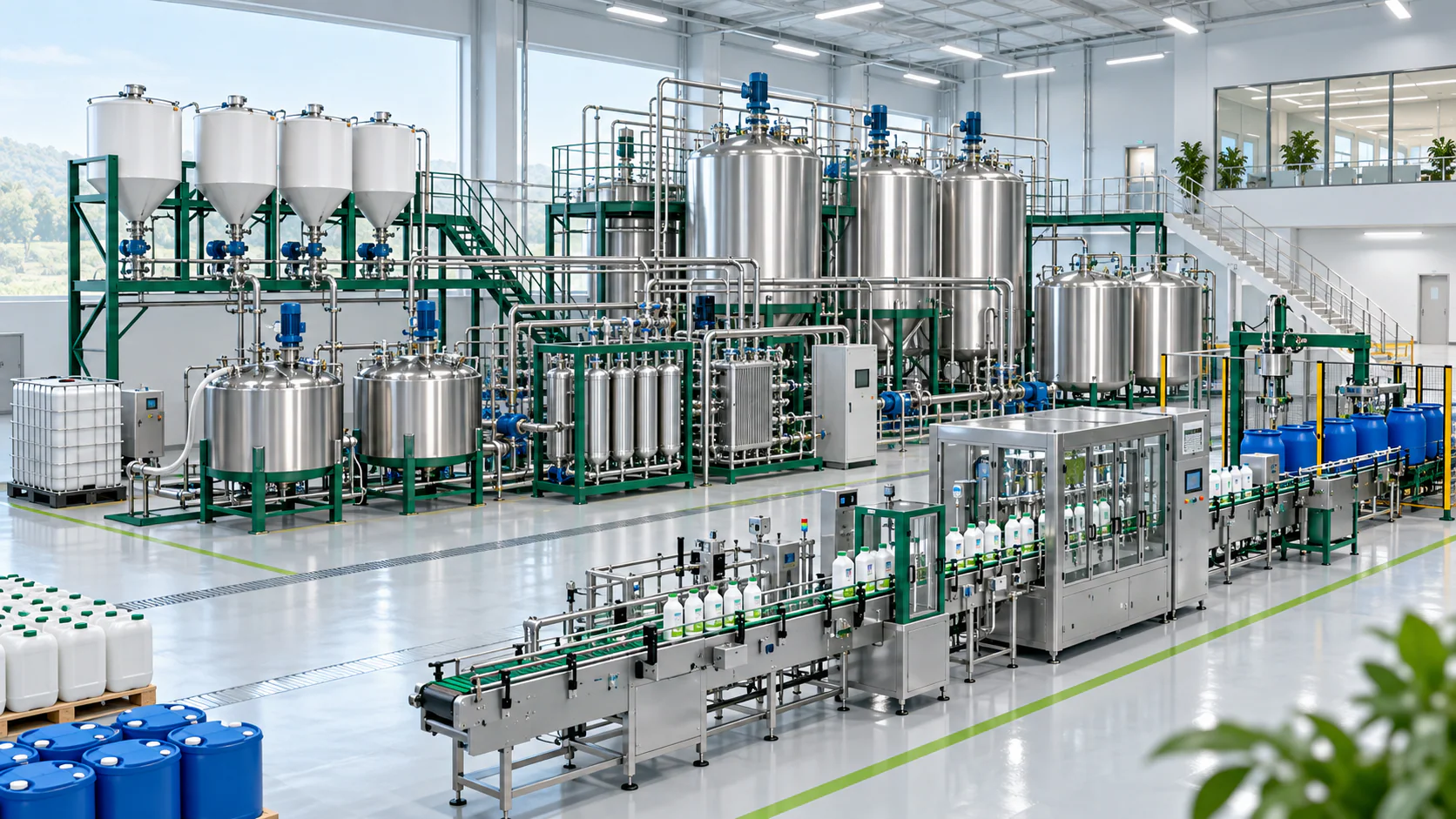
SolutionWater-Soluble Fertilizer Production Line
Primary feedUrea prills, NPK granules, Phosphate material
Finished productFiltered liquid / water-soluble fertilizer
Process routeRaw material dosing → Dissolution & reaction → Filtration / conditioning → Storage & filling
CapacityProject-specific; confirmed by mass balance
VoltageConfirmed for the destination country
AutomationManual-assisted, coordinated automatic or integrated
Project scopeProcess, equipment, controls, layout and service as agreed
Water-Soluble Fertilizer Production Line complete production line

One connected process, not isolated machines

Published ranges support planning; final specifications follow the material, site and local-standard review.

03
Feedstock readiness

Suitable raw materials

Each material card combines the project requirement with a realistic visual reference.

Urea prills

Nitrogen source with verified size and flowability

NPK granules

Qualified compound fertilizer granules or nutrient base

Phosphate material

Phosphate rock, SSP base or phosphate intermediates

Potash material

MOP, SOP or compatible potassium salts

✓
Moisture

Measure free water and seasonal variation.

✓
Particle condition

Confirm size, lumps, fibers and abrasiveness.

✓
Impurities

Identify stones, metal, plastics or insolubles.

✓
Storage behavior

Review caking, odor, flow and biological stability.

04
Market output

Target finished product

The line is configured backward from the required product and packaging standard.

Target product

Filtered liquid / water-soluble fertilizer

Formula concentration, clarity, stability and filling format

Representative material reference. Replace with an approved finished-product photograph.
Product formFiltered liquid / water-soluble fertilizer
Quality basisFormula concentration, clarity, stability and filling format
PackagingSmall bag, big bag, bulk or filling format by project
SamplingAgreed location, method and acceptance criteria
TraceabilityRecipe, batch and operating records when configured

Design priorities

  • Stable quality across operating shifts
  • Practical storage and dispatch
  • Safe operator and maintenance access
  • Local environmental compliance
  • Expansion-ready interfaces when required
05
Production sequence

Process flow

Every stage is sized against its inlet, outlet and recycle duty.
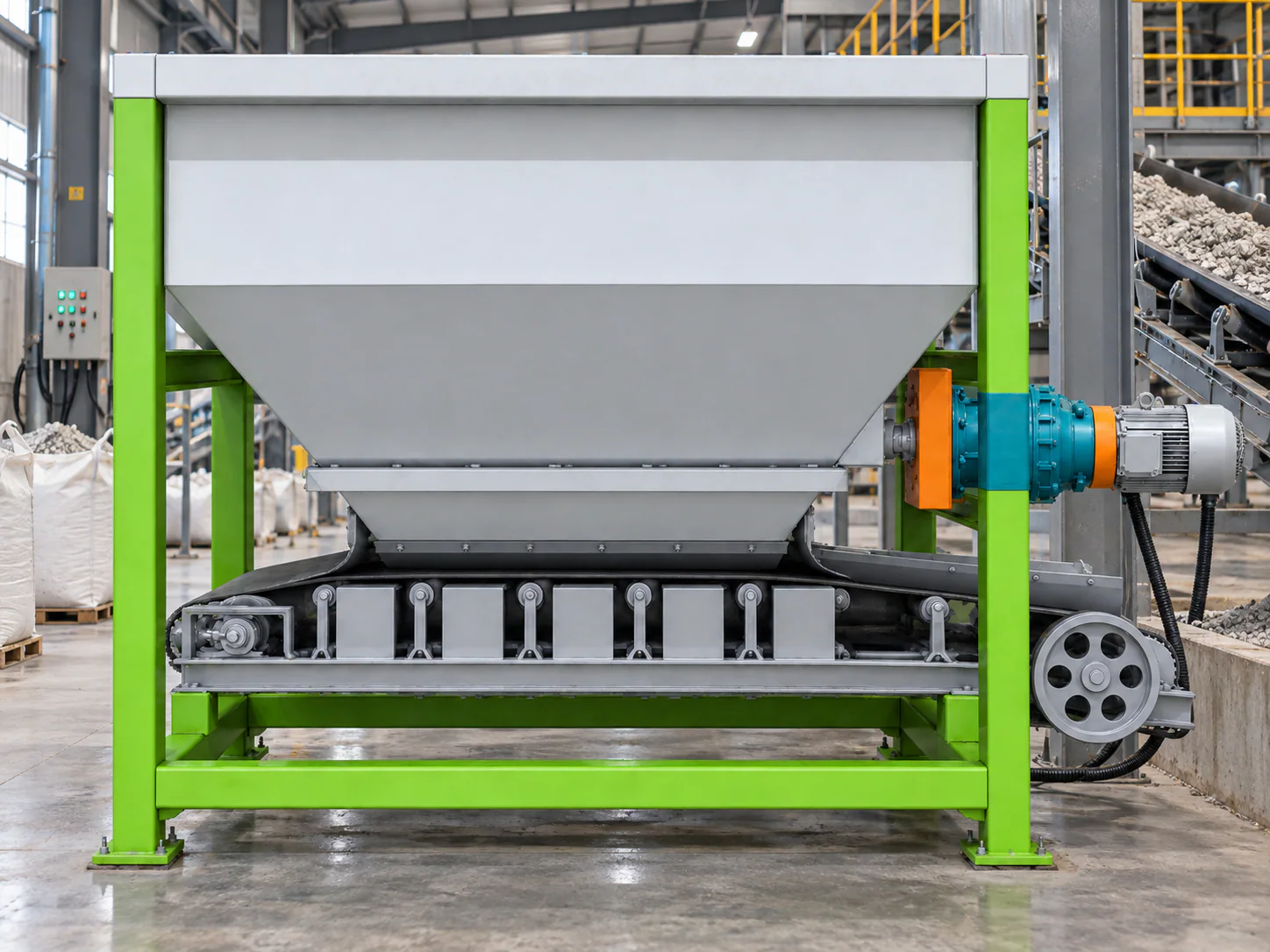
01Raw material dosing

Raw material dosing

Protect the next process stage

02Dissolution & reaction

Dissolution & reaction

Protect the next process stage

03Filtration / conditioning

Filtration / conditioning

Protect the next process stage

04Storage & filling

Storage & filling

Weigh and prepare approved product for dispatch

StagePurposeInputEquipmentOutputCritical control
1. Raw material dosingProtect the next process stageMaterial from the previous stageAutomatic Batching MachineConditioned material for the next stageFlow stability, condition and interface
2. Dissolution & reactionProtect the next process stageMaterial from the previous stageHorizontal MixerConditioned material for the next stageFlow stability, condition and interface
3. Filtration / conditioningProtect the next process stageMaterial from the previous stageProduct SiloConditioned material for the next stageFlow stability, condition and interface
4. Storage & fillingWeigh and prepare approved product for dispatchReleased finished productLiquid Filling MachineFilled package or containerWeight accuracy, cleanliness and traceability
Process balance rule

The final throughput is limited by the complete mass balance—including moisture change, recycle, storage buffers and packaging—not one machine’s nominal number.

06
Line architecture

Equipment configuration

Open each machine page for its role and selection boundary.

07
Scalable planning

Capacity & operating options

Use these as planning bands only. Final capacity follows the verified mass balance and operating schedule.

Concept arrangement for Pilot / low duty
Planning band 1

Pilot / low duty

Define in mass or volume per batch after formula and tank-cycle review.

  • Confirm inlet and finished-product basis
  • Balance utilities, labor and buffers
  • Reserve only validated expansion interfaces
Review this band
Concept arrangement for Commercial duty
Planning band 2

Commercial duty

Add duty/standby pumps, tanks and verified changeover time.

  • Confirm inlet and finished-product basis
  • Balance utilities, labor and buffers
  • Reserve only validated expansion interfaces
Review this band
Concept arrangement for Higher duty
Planning band 3

Higher duty

Use parallel storage or filling only after hydraulic and cleaning review.

  • Confirm inlet and finished-product basis
  • Balance utilities, labor and buffers
  • Reserve only validated expansion interfaces
Review this band
08
Site engineering

Plant layout

Concept arrangements show the route; final 2D and 3D drawings require the actual site and approved equipment schedule.

2D process arrangementRoute-specific concept, not a construction drawing
01Raw material dosing
02Dissolution & reaction
03Filtration / conditioning
04Storage & filling
Material flow →

Dimensions, elevations, aisles, foundations and utilities are issued only after site engineering.

3D arrangement referenceWater-Soluble Fertilizer Production Line
Conceptual Water-Soluble Fertilizer Production Line arrangement

Illustrative production-line view. A project-specific 3D model has not been supplied.

✓
Customized design

Adapt the arrangement to the land size and building.

✓
Material flow

Keep the production route direct and efficient.

✓
Equipment spacing

Reserve operation, lifting and maintenance access.

✓
Local compliance

Coordinate structure, fire, drainage and discharge.

09
Operating boundary

Utility requirements

Utilities are calculated from the final equipment schedule and local conditions.

01

Electricity

Voltage, frequency, connected load and transformer margin

02

Water

Process, cleaning and treatment requirements where applicable

03

Heat source

Fuel and hot-air system when thermal conditioning is used

04

Compressed air

Packing, valves and instruments where required

05

Workshop

Clear height, foundations, access, ventilation and drainage

06

Operators

Shift staffing based on automation and local handling

10
Stable production

Quality & environmental control

Control points are selected from the real material risks and product standard.

01

Dosing control

Verify formula inputs, calibration and recipe permissions.

02

Dust capture

Control transfer, mixing, screening and packing points.

03

Product sampling

Define representative sampling and acceptance criteria.

04

Cross-contamination

Plan clean-out and sequence changes between products.

05

Interlocks

Coordinate starts, stops, levels and fault protection.

06

Production records

Retain batch and operating data when required.

11
Budget planning

Investment factors

Compare proposals only after aligning process boundary, local scope and acceptance criteria.

Material pretreatmentTarget capacityCore process routeFinishing systemEnvironmental controlsAutomation levelPacking & local scopePROJECT COST

What determines the investment?

  • Raw-material variability and required pretreatment
  • Finished-product specification and operating hours
  • Core processing, recycle and storage buffers
  • Drying, cooling, screening or filtration duty
  • Dust, odor, exhaust and wastewater controls
  • Automation, packing and finished-product logistics
  • Country, freight, installation and civil-work boundary
12
Three planning levels

Configuration options

The final equipment list remains project-specific at every automation level.

ECONOMIC

Economic configuration

  • Essential process equipment
  • Manual-assisted handling where practical
  • Suitable for validated staged projects
Request configuration
AUTOMATED

High-automation configuration

  • Integrated dosing, controls and logistics
  • Expanded monitoring and production records
  • Suitable for stable high-volume operation
Request configuration
13
Comparable evidence

Project cases

Cases are linked only when their material and core process are relevant.

No verified matching case is published yet

A relevant case requires the same material, product, capacity and core process. We do not substitute an unrelated project.

Request a reference review
14
Engineering rationale

Why this process

The route is built around the required material transformation and the next stage’s inlet condition.

01

Why raw material dosing?

Protect the next process stage. The critical review covers flow stability, condition and interface.

02

Why dissolution & reaction?

Protect the next process stage. The critical review covers flow stability, condition and interface.

03

Why filtration / conditioning?

Protect the next process stage. The critical review covers flow stability, condition and interface.

04

Why storage & filling?

Weigh and prepare approved product for dispatch. The critical review covers weight accuracy, cleanliness and traceability.

15
Buyer questions

Frequently asked questions

These answers define the next engineering step without inventing fixed specifications.

How is the formula confirmed?

Provide the ingredient list, target concentration, compatibility information and local product standard.

Is filtration always required?

The filtration grade follows insoluble content, filling equipment and final-use requirement.

Can several recipes share one line?

Yes, when tank allocation, cleaning, sequencing and traceability are engineered for changeover.

Can existing equipment be reused?

Yes, after checking condition, duty, interfaces, controls, elevation and compatibility with the new mass balance.

Can the line be expanded later?

Yes, when space, conveyors, utilities, controls and structural loads reserve the correct interfaces.

What utilities should I provide?

Send local power, fuel, water, compressed-air and environmental conditions for engineering review.

How many operators are required?

Staffing depends on automation, shifts, storage, loading and the local handling method.

Do you provide installation and training?

The project scope can include layout coordination, installation guidance, commissioning and operator training.

What is needed for a quotation?

Send raw-material data, target product, capacity, site, utilities, packaging and preferred automation.

16
Start the engineering study

Get a customized production line design

Required project fields are standardized for engineering review and lead routing.

Get Your Fertilizer Production Solution & Quote

The more project details you provide, the more accurately our engineers can recommend the right equipment, production process, and solution for you.

Please share as much information as you can to receive a more accurate customized solution and quotation.

1Project basics2Project details
Step 1 of 2 — Tell Us About Your Project

Let’s start with a few basic details about your project. It only takes a minute.

Your Contact Information

Please use your business email if available.

Your basic project information is saved when you continue to Step 2.

Privacy notice

Leave Your Message

Project Inquiry Form
WhatsApp Us