Composted organic matter
Manure or waste compost, screened and matured. Its moisture and ash content drive the dryer load.
 Get a Proposal
Two feed streams, one granule: pre-treated organic matter and mineral nutrients combined so the product carries both organic matter and a declared NPK guarantee.
The engineering problem is the mismatch between the two streams: organic material arrives wet and variable, mineral salts arrive dry and precise. The line has to dry the first without over-heating it and dose the second without losing accuracy.
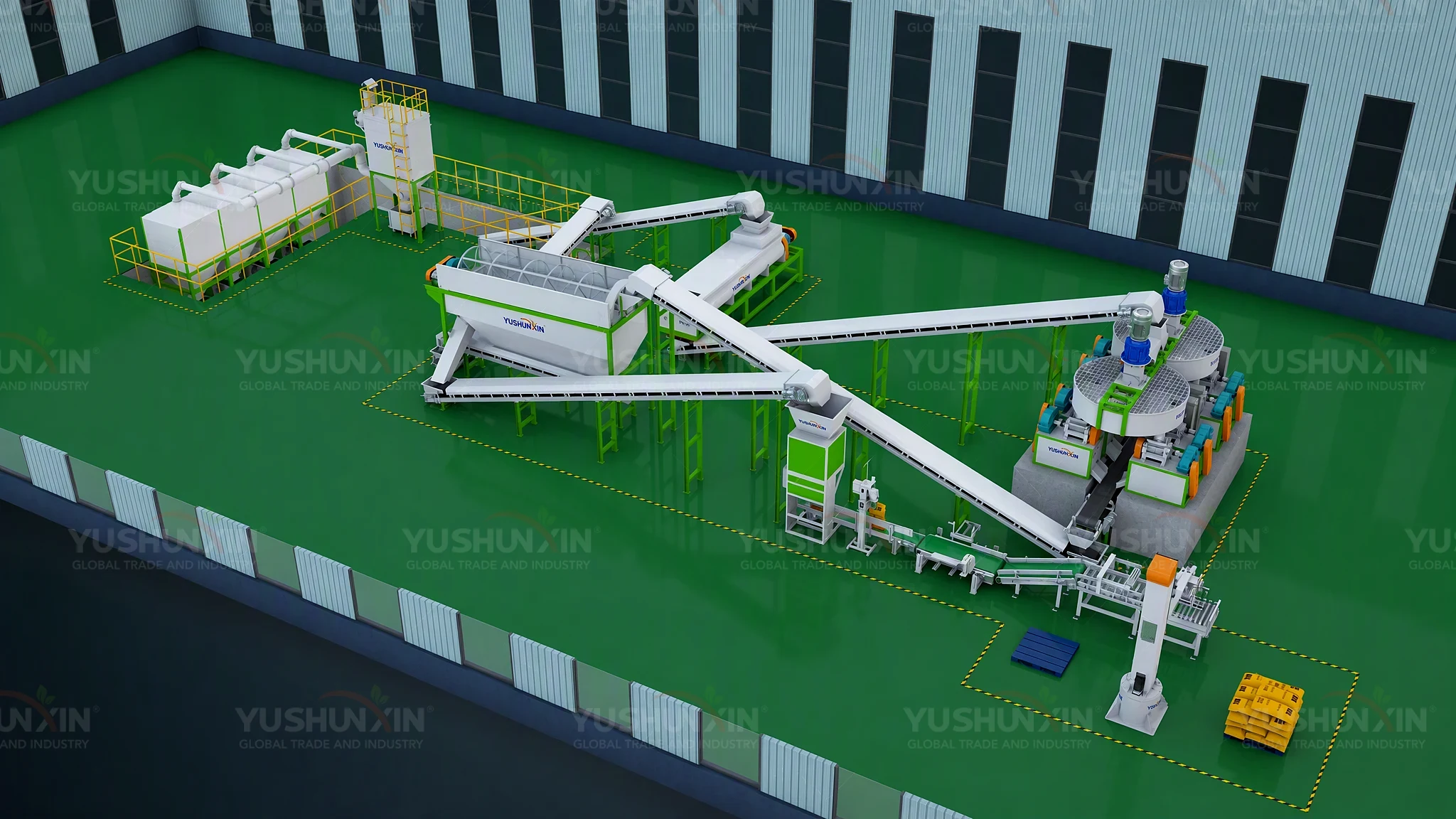
The organic stream sets the moisture and the mineral stream sets the analysis; granulation has to satisfy both at once.
The organic share is usually fixed by the product standard, which means the mineral share and the filler budget are decided by subtraction.
Manure or waste compost, screened and matured. Its moisture and ash content drive the dryer load.
Nitrogen sources; heat-sensitive, so drying temperature is capped by them as well as by the organic fraction.
Phosphorus sources with nitrogen carry-over that must be counted in the formula.
KCl or K2SO4, chosen by crop and chloride restriction.
Bentonite or lignin where the organic fraction weakens the granule.
Two guarantees on the same bag. Both must hold, and the second is limited by the first.
Declared as a percentage, verified by the reference method for the target market.
Calculated around the nutrients already present in the organic fraction, not added on top of them.
The organic fraction tends to soften the granule; binder and moisture control compensate.
Organic matter holds water, so cooling and coating matter more than on a pure mineral line.
Eight stages. The first exists only because the organic stream cannot be fed straight into a mineral batching system.
| Stage | Purpose | Key equipment | Control point |
|---|---|---|---|
| 1. Organic pre-treatment | Screen, crush and dry the organic fraction to a stable feed | Crusher, screener, dryer | Moisture at the batching hopper |
| 2. Batching | Weigh organic and mineral components to recipe | Automatic batching machine | Two-stream accuracy |
| 3. Mixing | Homogenise before granulation | Double-shaft mixer | Residence time |
| 4. Granulation | Form the granule | Rotary drum or double roller | Moisture and binder |
| 5. Drying | Bring the granule to spec moisture | Rotary drum dryer | Temperature cap for urea |
| 6–8. Screening, coating, packing | Size, protect, bag | Screener, coating drum, packing machine | Oversize recycle |
Typical equipment scope for this route. Final selection follows the approved mass balance and site conditions.

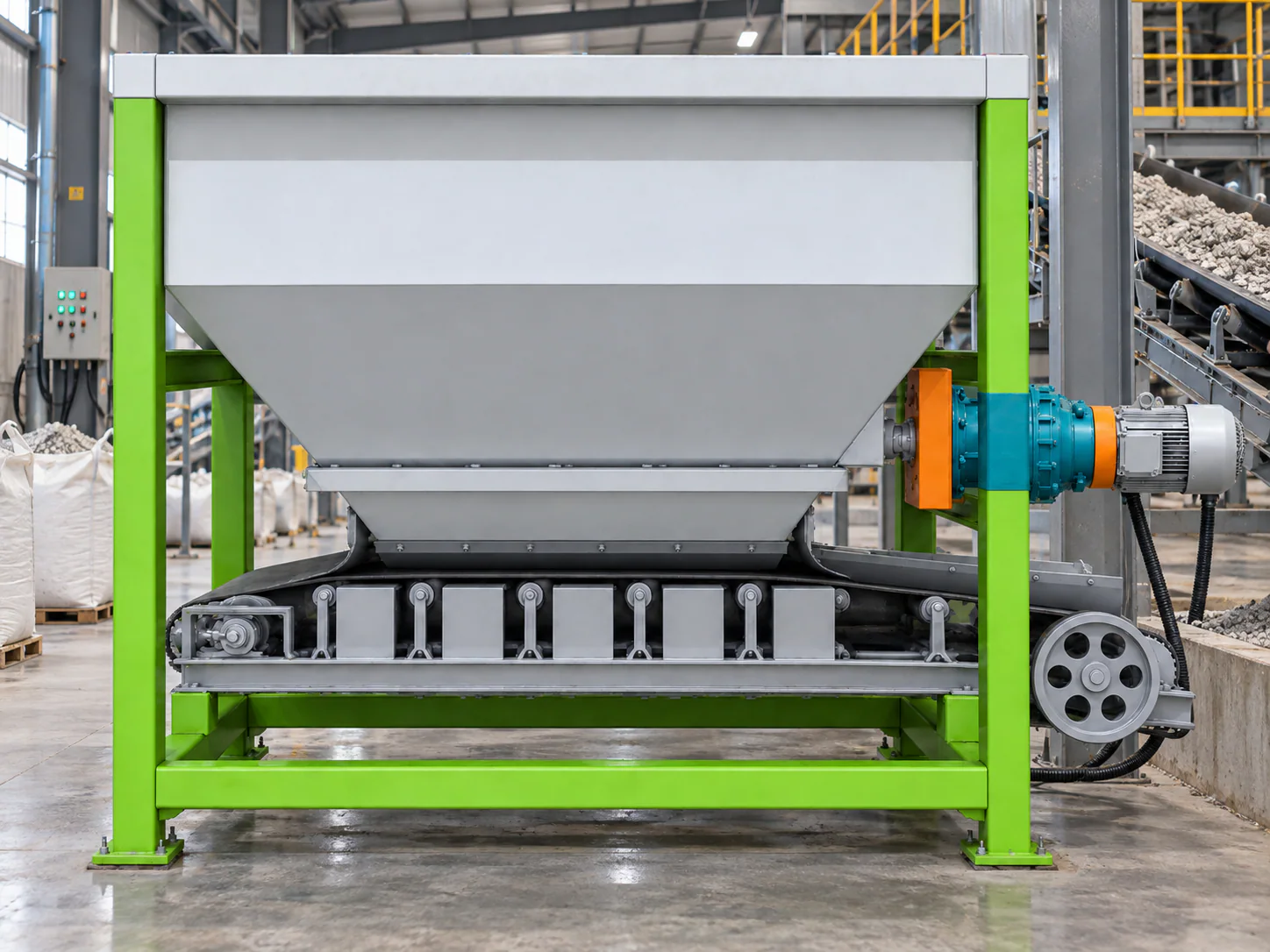

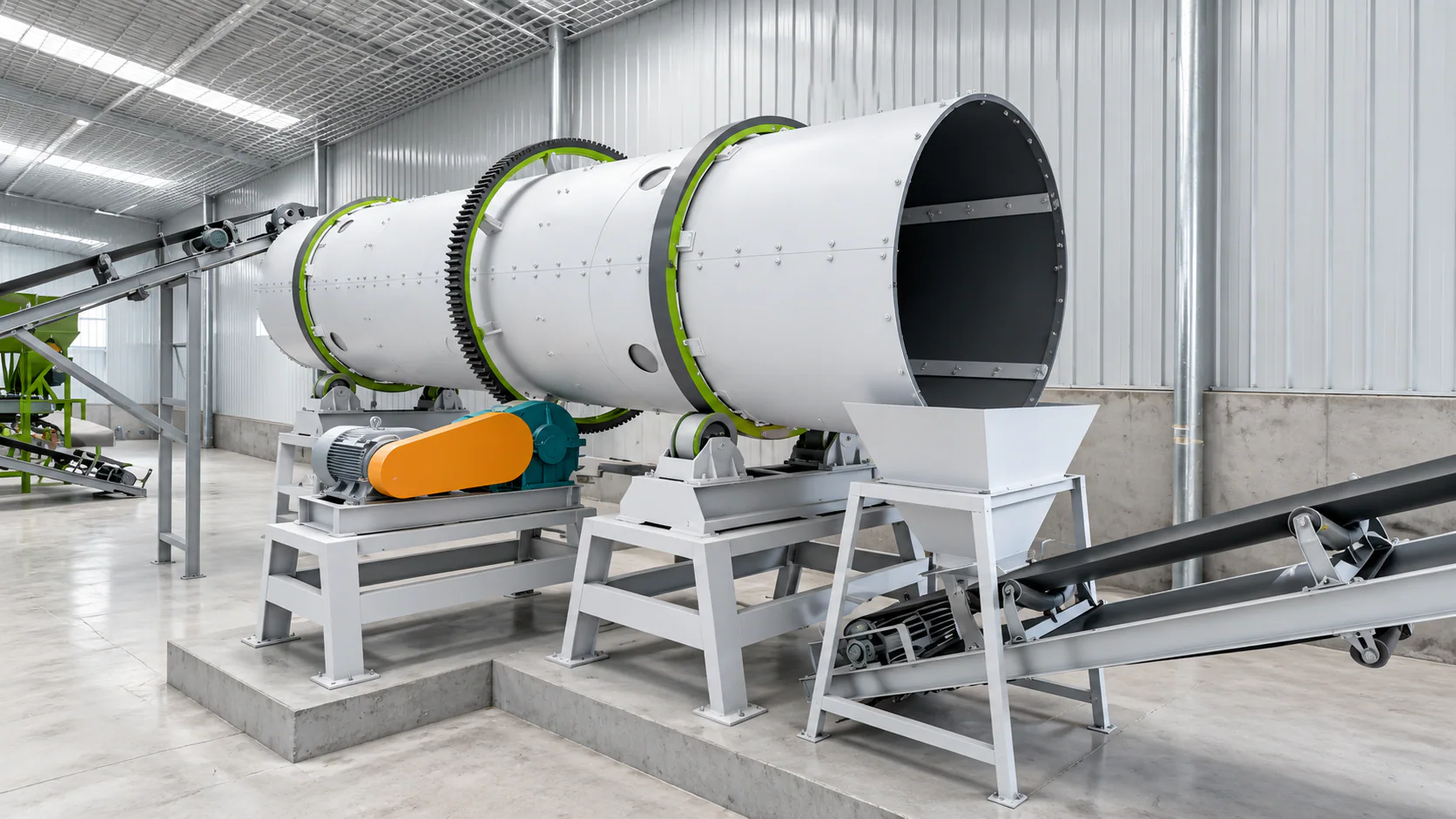
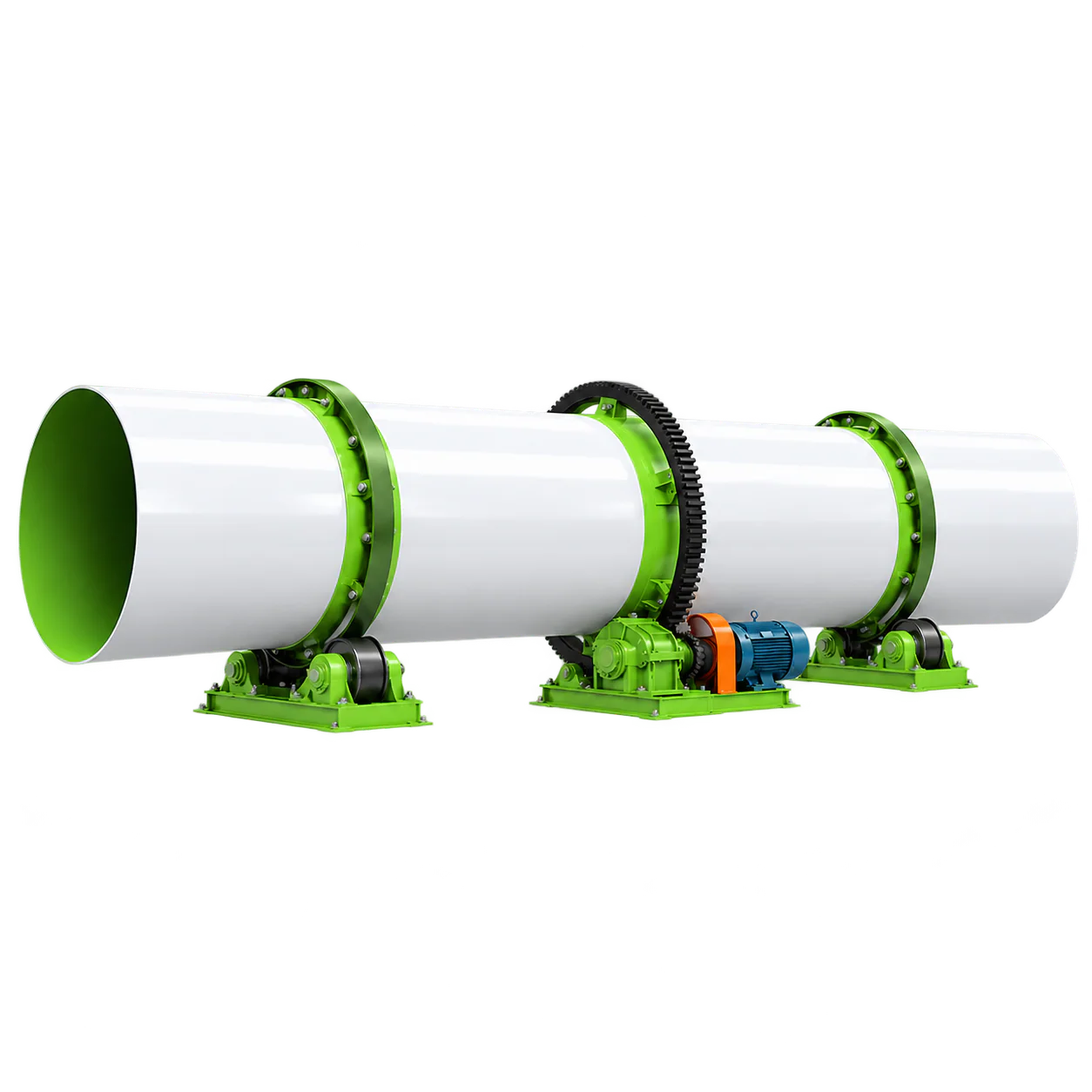

Bands describe typical project scale; the actual figure is confirmed by mass balance, not by a nominal model number.
Single train, organic fraction pre-dried in batches.
Continuous pre-treatment, parallel granulators, automatic bagging.
Multi-line plant with separate organic and mineral storage.
Basis for the utility sheet. Local voltage, fuel and water quality are confirmed during engineering.
Two crushing and drying duties push the load above a pure mineral line.
Two drying duties: organic pre-treatment and final granule drying.
Where drum granulation is used; not required for roller compaction.
Process water for granulation, balanced against the organic moisture.
Organic dust is fibrous and clogs filters faster than mineral dust; size accordingly.
Separate dry bays for mineral raw materials and covered bays for organic feed.
Controls that decide whether the line holds its specification in daily operation.
Measured on the feed, not assumed from the supplier certificate.
The most common formula error is double-counting it.
Two streams, one target; the mixer discharge is the control point.
Organic-rich granules fail earlier in handling; test at bagging.
Straight answers on scope, limits and what we need to quote.
It follows the product standard and the granule strength you need. Above roughly 30 percent organic matter, binder selection becomes the limiting design decision.
No. The organic fraction must be composted and matured first, otherwise the bag reheats and the nutrient guarantee is unreliable.
Drum suits higher organic shares and rounder granules; roller compaction suits drier mixes and higher output with less drying.
From the mineral inputs plus the credited nutrients in the organic fraction, then verified by assay on the finished granule.
Yes, by bypassing the organic pre-treatment. The batching recipe and dryer setpoints change; the equipment does not.
Organic matter source and assay, target organic percentage, NPK guarantee, output and site utilities.
Send material, capacity and site constraints; the engineering team replies with a route recommendation.
 +8615981847286WhatsApp
 [email protected]Email
 Please enter the contentSearch
 Click to return to the topTOP