Granular urea
Nitrogen source; prilled or granular. Granular form blends better with MAP and potash.
 Get a Proposal
Dry blending of granular NPK raw materials: weigh, mix, bag. No chemical reaction, no granulation, no drying, and a new formula can be sold the same week.
A bulk blending line combines granular raw materials physically. Because nothing is dissolved or dried, the nutrient content of the blend is exactly the sum of its parts, and the plant can hold many formulas with the same equipment.

Blending only works if the raw materials share a similar particle size; that is a purchasing rule, not a machine setting.
The line accepts any free-flowing granular material. Particle size and bulk density matching is what keeps the bag honest.
Nitrogen source; prilled or granular. Granular form blends better with MAP and potash.
Phosphorus sources; their size range should bracket the urea range.
KCl or K2SO4. Densest component; tends to settle in the bag.
Sand, limestone or dolomite to reach the declared analysis.
Anti-caking coating where storage humidity is high.
A blend is judged on two things at once: the analysis on the bag and whether the analysis is still the same at the bottom of the bag.
The sum of the weighed components, with no process loss.
Governed by matching particle size and density before the blend is made.
Uniform granules matter commercially; a striped blend gets rejected even when the analysis is right.
Kept low to prevent caking; the line has no dryer to correct it.
Four stages, all mechanical. The simplicity is the point: the same equipment can run dozens of formulas.
| Stage | Purpose | Key equipment | Control point |
|---|---|---|---|
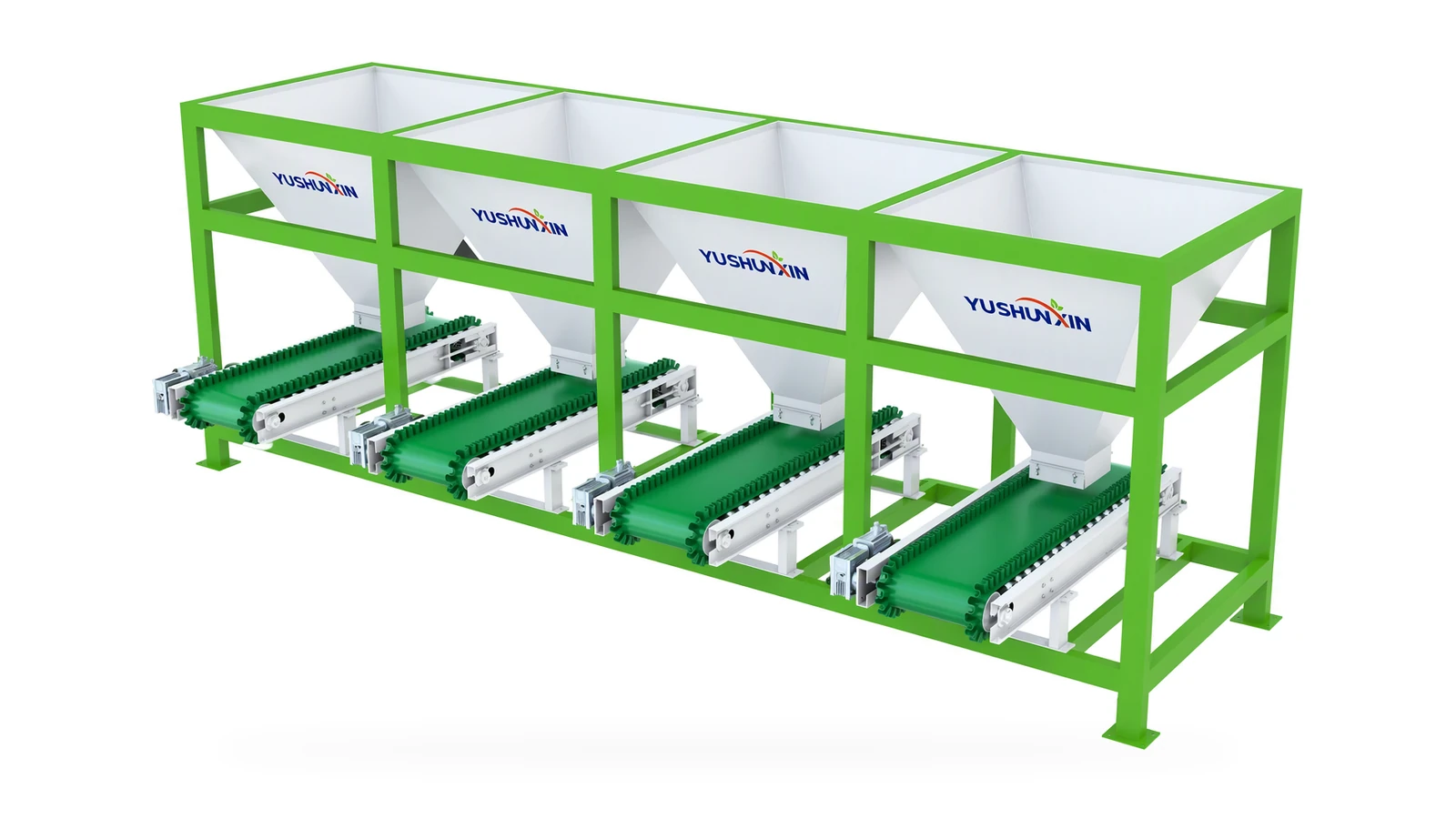
| 1. Batching | Weigh each granular component | Automatic batching machine | Smallest share sets accuracy |
| 2. Blending | Homogenise without damaging granules | Double-shaft mixer or drum blender | Residence time vs breakage |
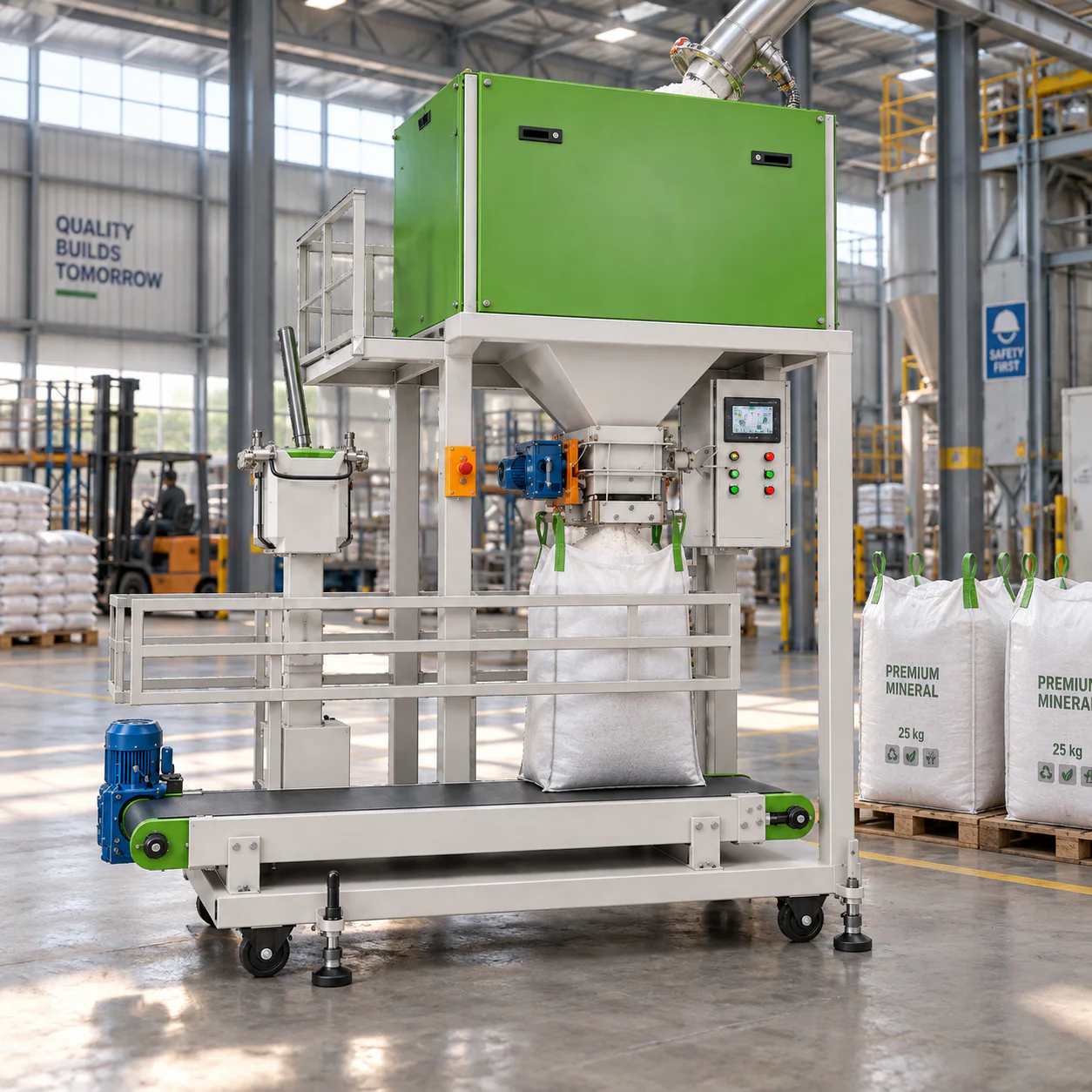
| 3. Bagging | Fill to net weight | Packing machine | Weight tolerance |
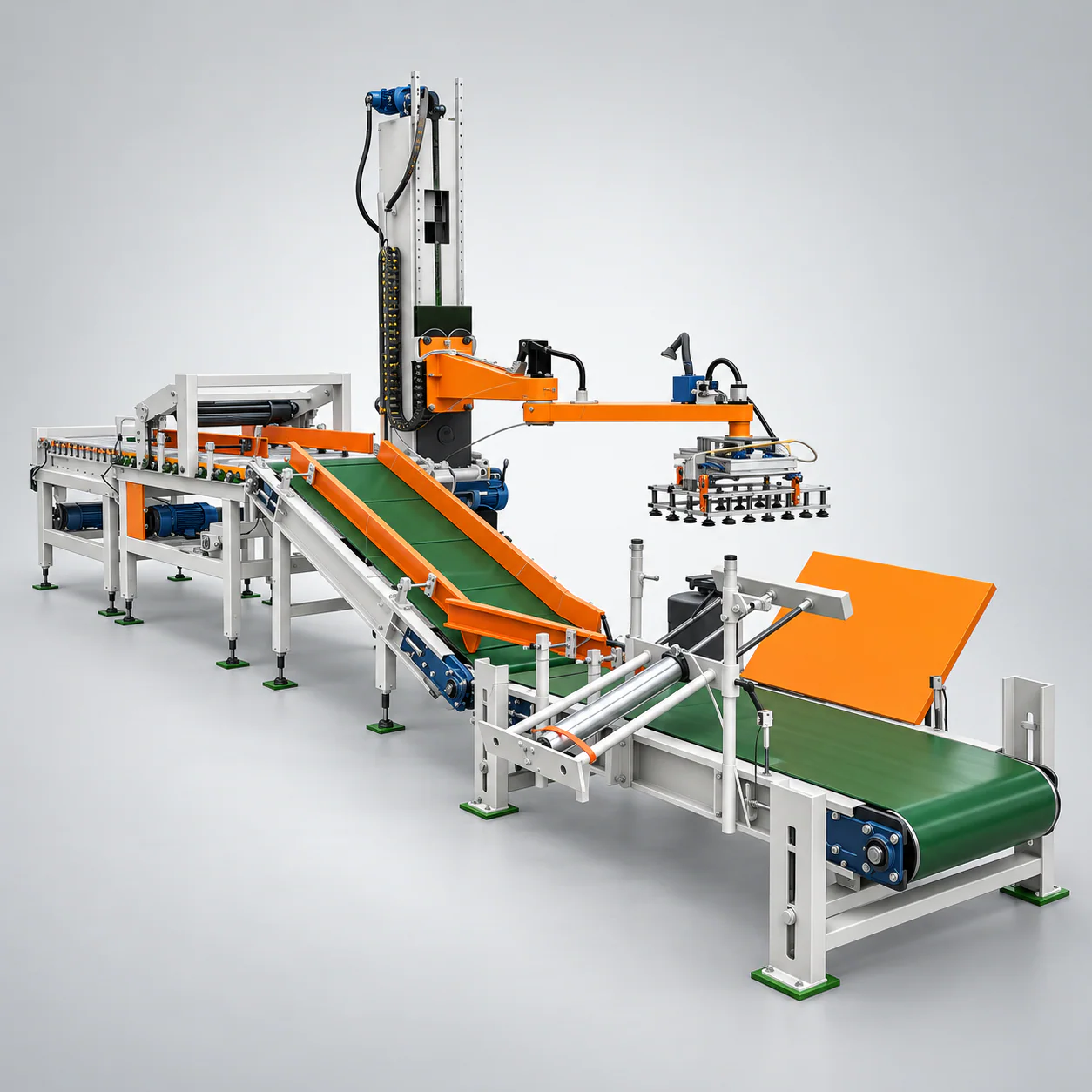
| 4. Palletising | Stack for transport | Palletiser | Bag stability |
Typical equipment scope for this route. Final selection follows the approved mass balance and site conditions.

Bands describe typical project scale; the actual figure is confirmed by mass balance, not by a nominal model number.
Single blender, manual bag placing.
Automatic batching and bagging, palletiser optional.
Continuous blending with bulk loadout and bagging in parallel.
Basis for the utility sheet. Local voltage, fuel and water quality are confirmed during engineering.
Blender and bagging line only; no thermal load.
Bag clamps, cylinders, dust collectors.
At batching, blending and bagging.
Dry, segregated bays; blending amplifies any moisture problem in the raw materials.
Controls that decide whether the line holds its specification in daily operation.
Checked on incoming material, per supplier.
Sampled at start, middle and end of the batch.
Checked hourly against the declared net weight.
A bag left standing for a week tells you more than a lab test.
Straight answers on scope, limits and what we need to quote.
Blend when the market accepts physical mixtures and the raw materials match in size. Granulate when you need a uniform granule, a higher analysis, or a product that travels well.
Particle size and density mismatch. Fix it in purchasing, not by mixing longer.
Yes, with a separate dust system; organic powders behave differently from granular salts.
Formulas, raw material size ranges, bag size and hourly output.
Send material, capacity and site constraints; the engineering team replies with a route recommendation.
 +8615981847286WhatsApp
 [email protected]Email
 Please enter the contentSearch
 Click to return to the topTOP