Granular raw materials
Urea, MAP, DAP, KCl, K2SO4. Free-flowing; belt or gravity feeders.
 Get a Proposal
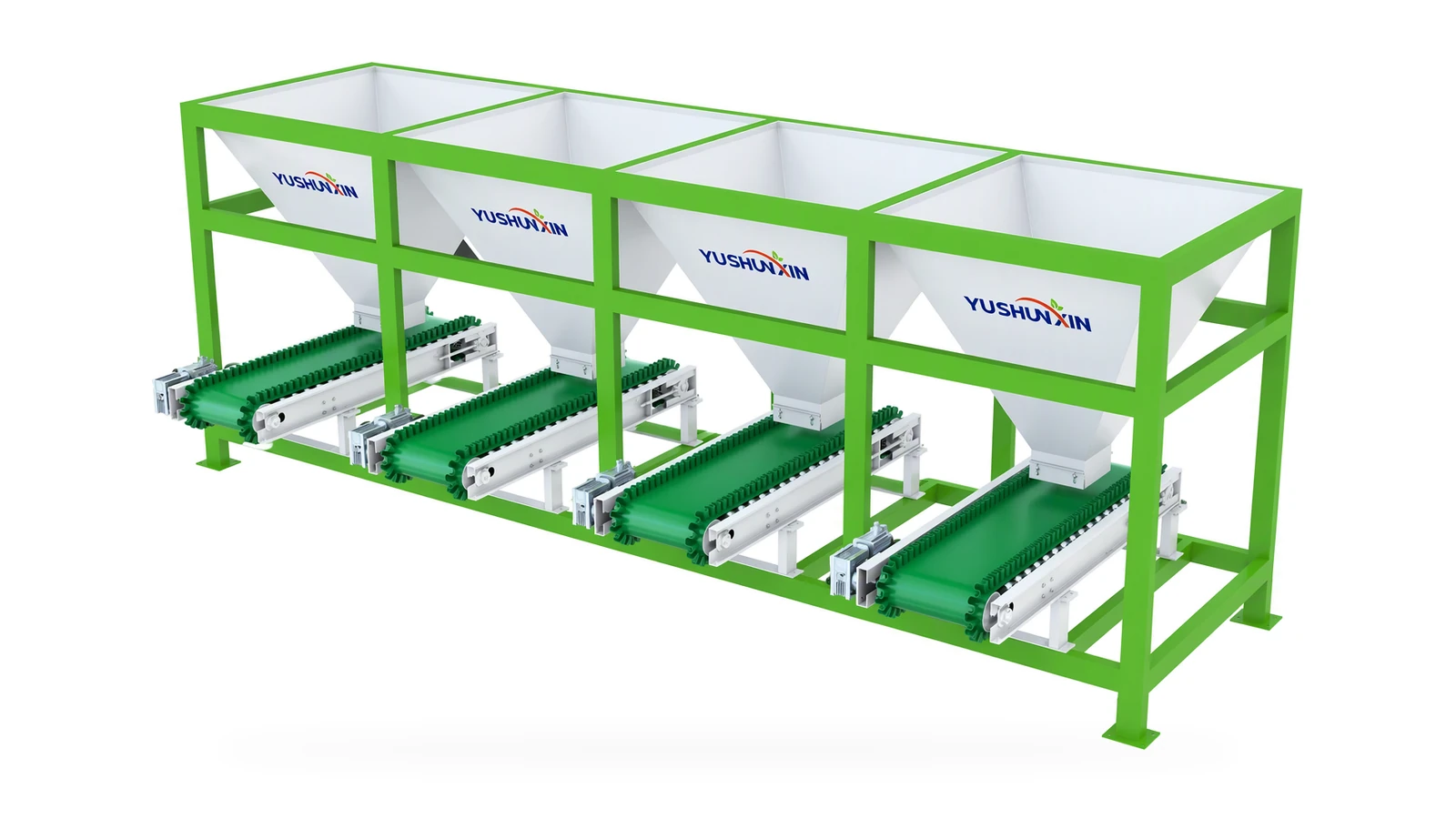
The weighing and dosing core of a blending plant: silos, feeders, weigh hoppers and recipe control, supplied as a system that can feed a mixer, a granulator or a packing line.
Batching is where a blend is won or lost. This system meters each raw material by weight against a stored recipe, records the batch, and discharges a homogeneous mix to whatever comes next. It contains no granulation and no drying.
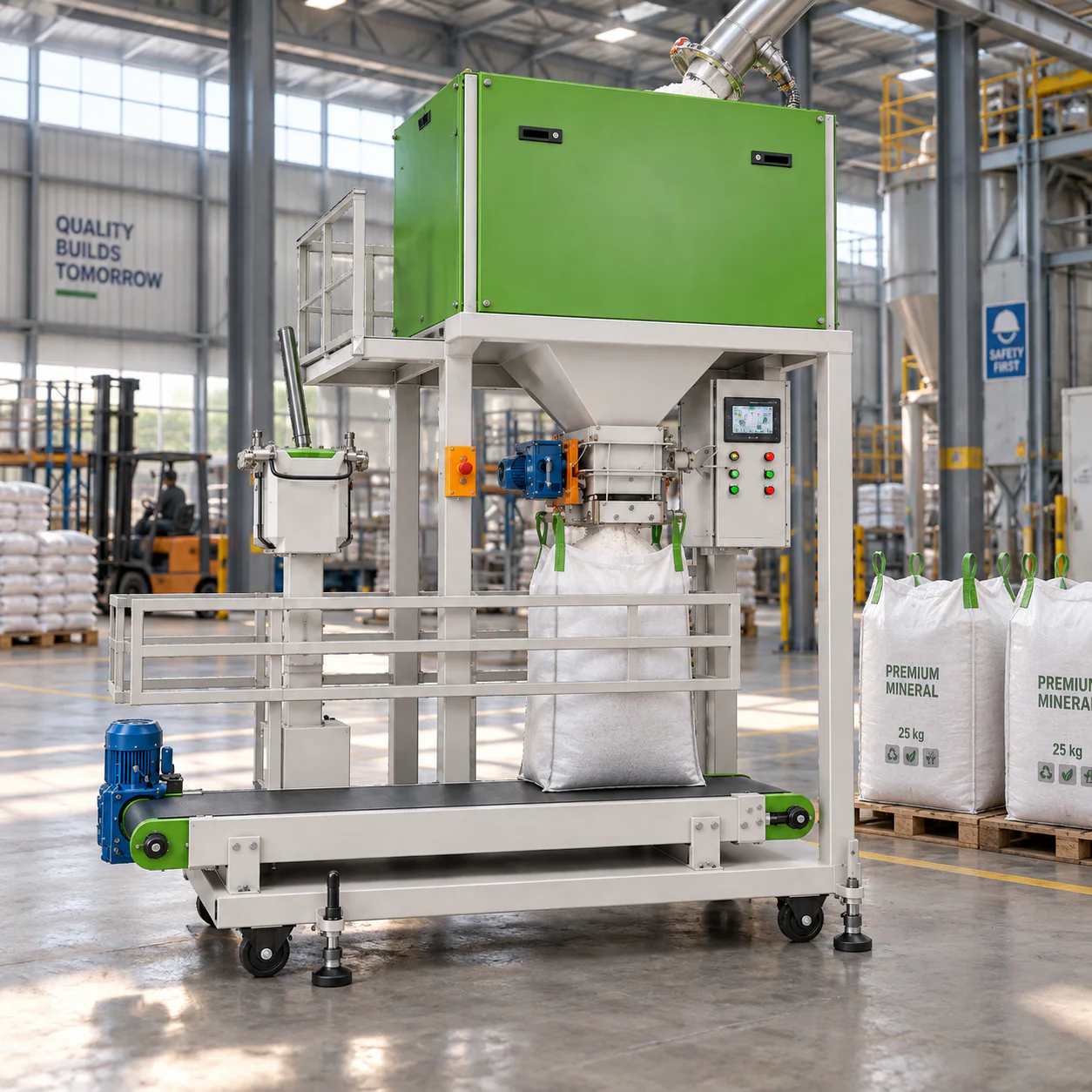
The weigh hopper is the quality instrument; everything downstream inherits its error.
Any free-flowing granular or powdered material can be batched, provided the feeder type matches its flow behaviour.
Urea, MAP, DAP, KCl, K2SO4. Free-flowing; belt or gravity feeders.
Filler, micronutrients and conditioners. Prone to bridging; screw feeders with agitation.
Need dry air or sealed silos to keep flow stable.
Small shares dominate the accuracy requirement; often weighed on a separate small scale.
Returned from screening, metered back into the recipe.
The output is not a product but a guaranteed batch: the weight record is what the downstream process and the customer audit rely on.
Ingredient weights, recipe version, operator and time, exportable.
Stored formulas recalled without re-entering weights.
Achieved in the mixer that follows; batching only guarantees the input ratio.
Batch number tied to the packed bags.
Four stages plus an optional mixer. The system is deliberately independent of the granulation line so it can be added to an existing plant.
| Stage | Purpose | Key equipment | Control point |
|---|---|---|---|
| 1. Storage | Hold raw materials without segregation | Silos and day bins | Angle of repose, bridging |
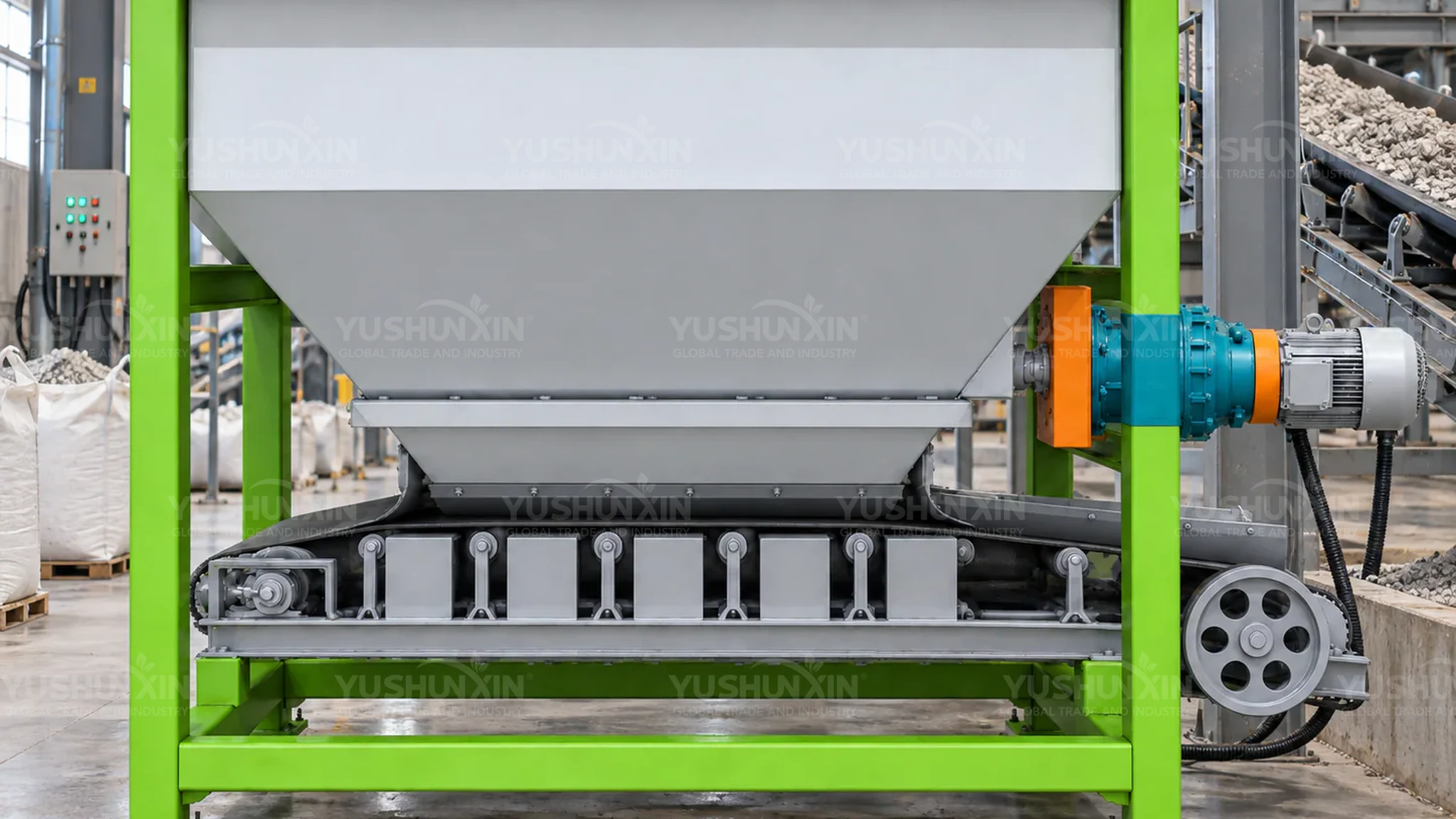
| 2. Feeding | Deliver material to the scale at controlled rate | Screw or belt feeders | Feed rate vs. scale capacity |
| 3. Weighing | Cut each ingredient at the recipe weight | Weigh hopper with load cells | Calibration interval, tare drift |
| 4. Discharge / mixing | Release the batch, homogenise if required | Double-shaft mixer | Residence time |
Typical equipment scope for this route. Final selection follows the approved mass balance and site conditions.
Bands describe typical project scale; the actual figure is confirmed by mass balance, not by a nominal model number.
Manual bag feeding, single scale, recipe by selector switch.
Multi-silo automatic feeding with PLC recipes and batch logging.
Continuous blending with in-line weighing and automatic changeover.
Basis for the utility sheet. Local voltage, fuel and water quality are confirmed during engineering.
Feeders, scales and PLC; modest compared with a granulation line.
For cylinders and bin vibrators.
Optional, for hygroscopic salts.
Load-bearing for loaded silos; vibration isolation for the scales.
Controls that decide whether the line holds its specification in daily operation.
Scheduled and logged; drift is silent.
The usual source of out-of-spec batches.
Every batch record must name the version used.
Prevents carry-over between formulas.
Straight answers on scope, limits and what we need to quote.
It depends on the smallest ingredient share and the scale range chosen for it. We size the scale from the recipe, then state the achievable tolerance.
One per raw material plus filler; micronutrients are often batched from bags on a small scale.
Yes. The discharge conveyor is configured to the existing inlet height and rate.
Optional. Batching only fixes the ratio; homogenisation happens in the mixer.
Send material, capacity and site constraints; the engineering team replies with a route recommendation.
 +8615981847286WhatsApp
 [email protected]Email
 Please enter the contentSearch
 Click to return to the topTOP