Poultry litter
Manure plus bedding from broiler or layer houses. Dry, fibrous, high in ash and calcium.
 Get a Proposal
Litter arrives dry, fibrous and ash-rich, which changes both the fermentation design and the granulation recipe compared with slurry-based poultry manure.
Poultry litter is manure mixed with bedding. It ferments faster than slurry because it already has structure, but its ash and salt load limits how much can go into a bag. The line is built around screening out foreign matter early and keeping the recipe inside the salt budget.
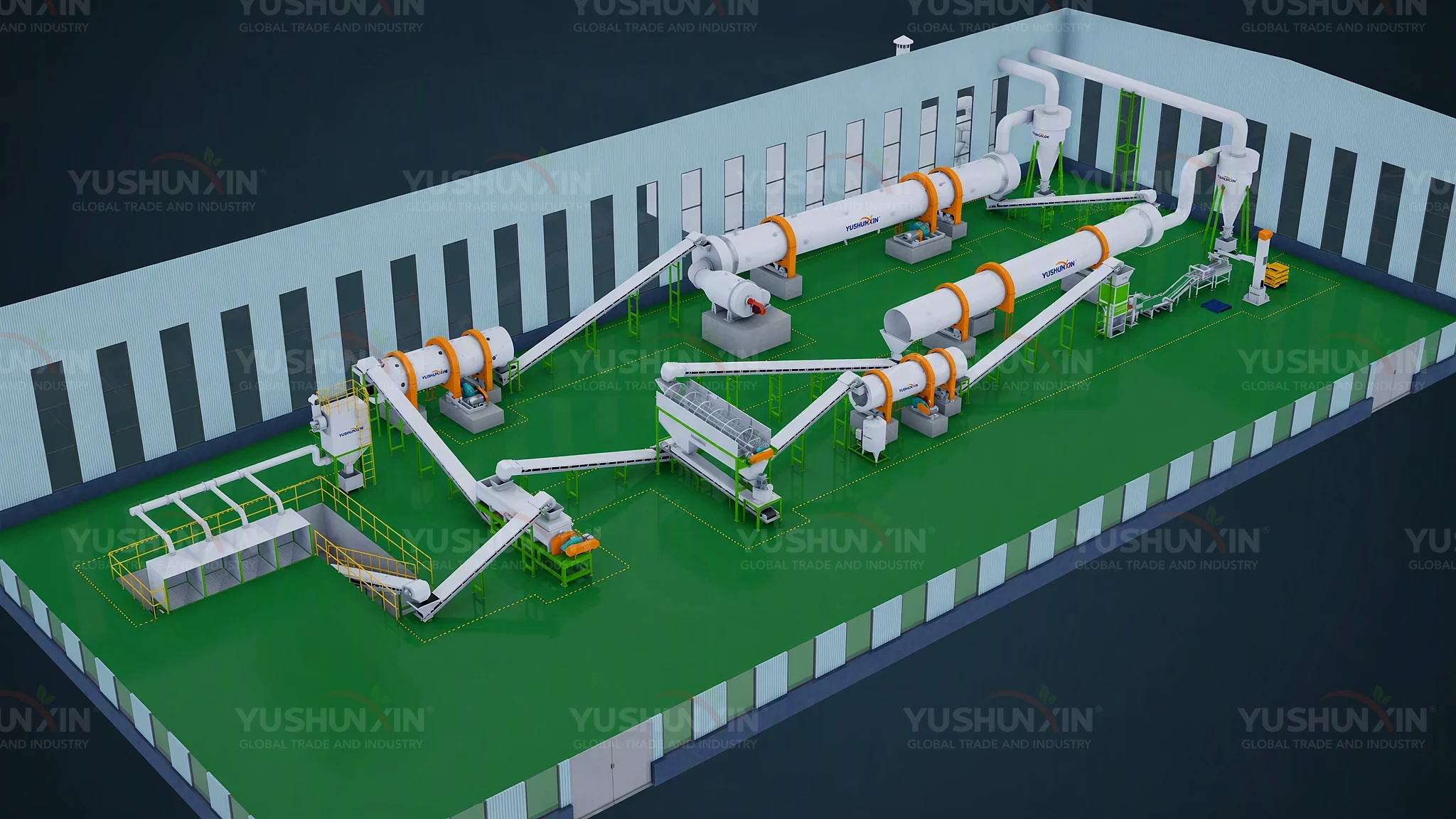
Litter is screened before fermentation so stones, wire and plastic never reach the granulator.
Bedding type decides the carbon-to-nitrogen ratio and the fibre length, which in turn decides how much crushing the line needs.
Manure plus bedding from broiler or layer houses. Dry, fibrous, high in ash and calcium.
Adds carbon and porosity; long fibres need shredding before batching.
Matured litter compost used to seed new batches and stabilise moisture.
Bentonite or lignin where litter fibre alone will not hold a granule.
Used to dilute salt load and reach the declared analysis.
The product competes with ordinary manure compost, so granule quality and a clean analysis are what justify the price.
3–5 mm typical; screened to a declared range.
Electrical conductivity checked on the finished product, not only on the feed.
Declared after ash correction; litter ash varies widely between houses.
Screening before fermentation is what keeps glass and wire out of the bag.
Six stages. Pre-treatment exists because litter cannot be fed straight into a granulator.
| Stage | Purpose | Key equipment | Control point |
|---|---|---|---|
| 1. Pre-treatment | Break bedding, remove stones, wire and plastic | Vertical crusher, rotary drum screener | Screen aperture vs bedding length |
| 2. Fermentation | Stabilise and sanitise the litter | Groove-type compost turner | Temperature curve and turning |
| 3. Batching | Balance carbon, binder and filler | Automatic batching machine | Ash and salt budget |
| 4. Granulation | Form the granule | Disc granulator or double roller | Moisture at the press |
| 5. Drying & cooling | Reach spec moisture, stabilise | Rotary drum dryer and cooler | Material discharge temperature |
| 6. Screening & packing | Classify and bag | Screener, packing machine | Oversize recycle |
Typical equipment scope for this route. Final selection follows the approved mass balance and site conditions.


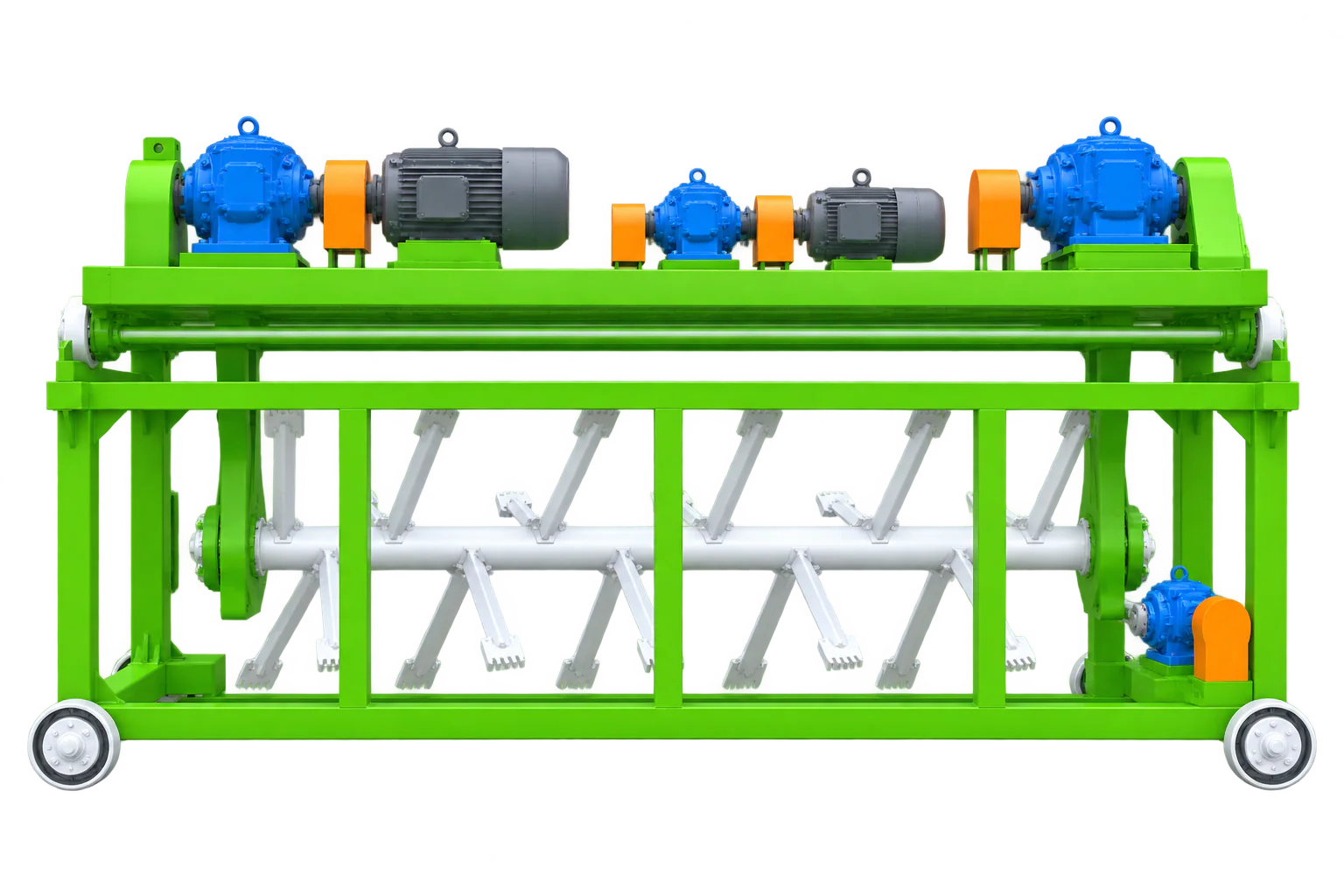
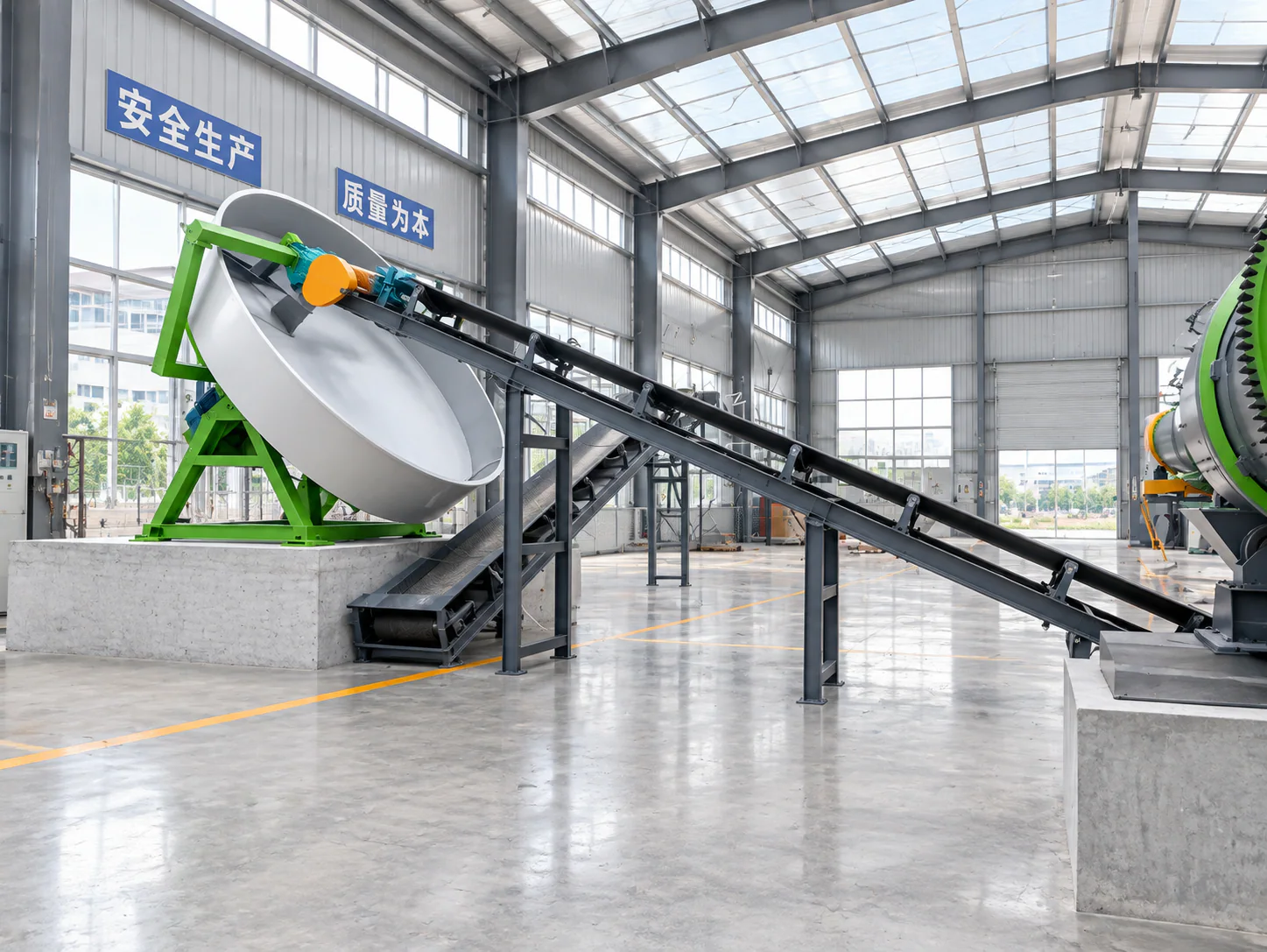
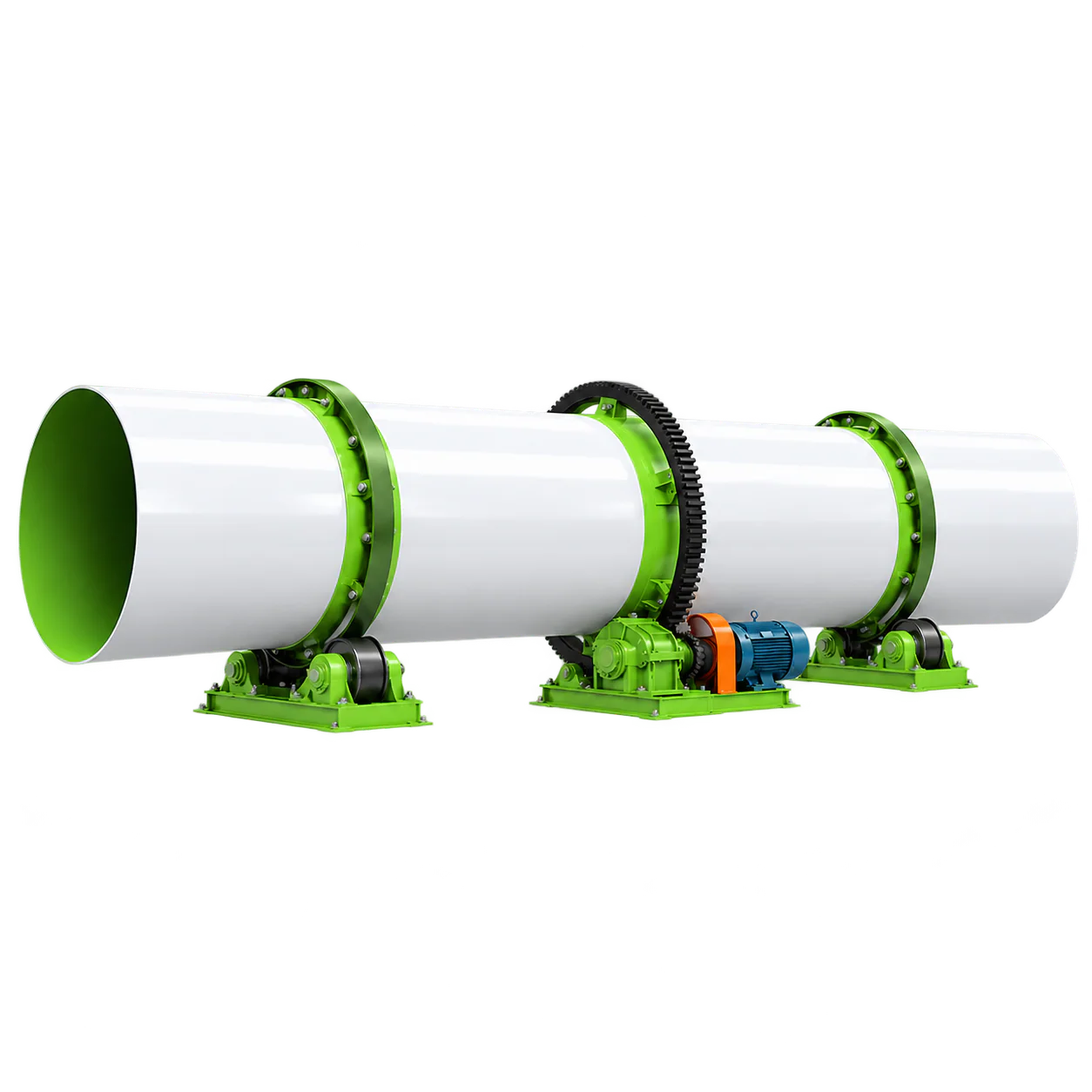
Bands describe typical project scale; the actual figure is confirmed by mass balance, not by a nominal model number.
Single line; yard fermentation, one granulator and dryer.
Parallel granulators with shared drying and automatic bagging.
Multi-line plant with separate pre-treatment and buffer silos.
Basis for the utility sheet. Local voltage, fuel and water quality are confirmed during engineering.
Crusher and dryer dominate the load.
Dryer heat source; litter burns readily, so fire risk in the dryer needs a spark arrestor.
Small make-up for granulation; litter is already dry.
Fibrous litter dust bridges in filters; use a pre-separator.
Litter dust is combustible. Earthing, spark detection and housekeeping are part of the scope.
Covered bays, since rain turns litter into an unmanageable mass.
Controls that decide whether the line holds its specification in daily operation.
Checked at the pre-treatment screen, not at the bag.
Sampled per batch; it moves with bedding and feed changes.
EC test on the finished granule for sensitive crops.
The variable that decides recycle load.
Straight answers on scope, limits and what we need to quote.
No. It must be fermented and stabilised first, otherwise the bag reheats and the analysis drifts.
It is a design input: long bedding needs more shredding and lowers bulk density. Send the bedding type and share.
By capping the litter share in the recipe and diluting with filler or lower-salt organic matter.
Litter tonnage, bedding type, target granule size, and whether the product is organic-only or organic-inorganic.
Send material, capacity and site constraints; the engineering team replies with a route recommendation.
 +8615981847286WhatsApp
 [email protected]Email
 Please enter the contentSearch
 Click to return to the topTOP