Animal manure
Cattle, pig or poultry manure. High moisture and nitrogen; needs a dry, carbon-rich partner.
 Get a Proposal
Fermentation, maturation, crushing and screening without a granulation stage, for markets where a loose compost product is sold as-is or blended rather than pelleted.
This route stops before granulation. It turns raw organic waste into a screened, saleable compost powder: fermentation, maturation, crushing, screening and packing. Granulation is an option, not a default.
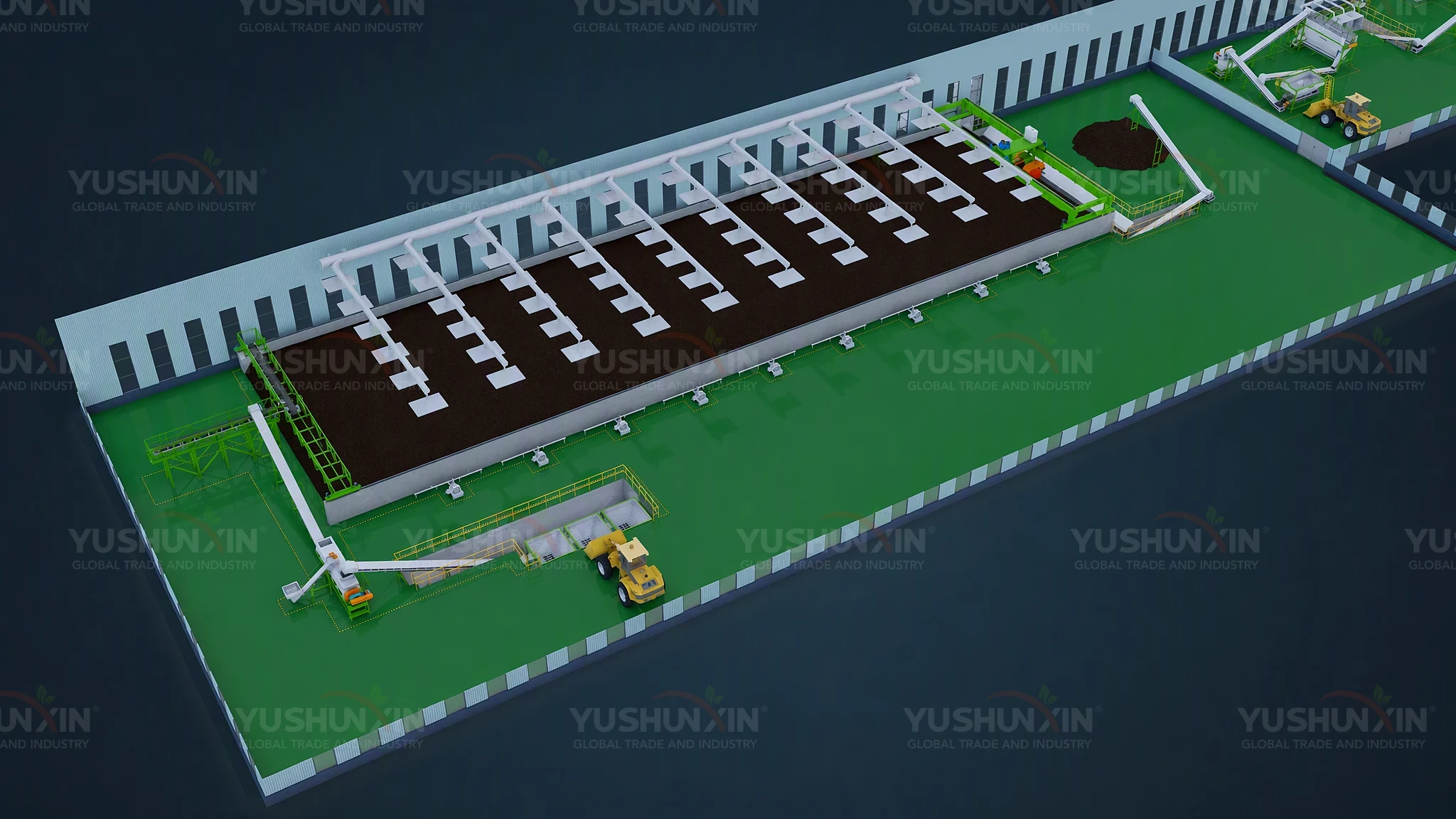
The fermentation yard, not the machine hall, is the centre of this line; sizing and packing are the finishing steps.
Almost any organic stream can be composted. What decides the layout is moisture, C/N ratio and how much bulking agent the site can absorb.
Cattle, pig or poultry manure. High moisture and nitrogen; needs a dry, carbon-rich partner.
Straw, husk or stalks. Provides structure and carbon; usually needs shredding first.
High moisture and easily degraded. Requires fast turnaround and odour control.
Wood chips, rice husk or returned compost to keep porosity through the windrow.
Optional. Useful on cold starts or when the indigenous population is weak.
The product is a screened powder. Its value depends on maturity, moisture and particle size, not on granule strength.
Finished compost must pass a maturity check; immature material reheats in the bag and burns roots.
Typical 0–10 mm after screening, with an oversize return to the crusher.
Held low enough to bag and stack without leachate or mould.
Plastic, glass and stones removed before screening; this decides whether the product can be certified.
Six stages, and the first two take the longest. Sizing and packing are quick; fermentation is where the schedule is won or lost.
| Stage | Purpose | Key equipment | Control point |
|---|---|---|---|
| 1. Fermentation | Thermophilic breakdown of organic matter | Windrow turner or in-vessel fermenter | Temperature and turning frequency |
| 2. Maturation | Finish the reaction, stabilise the product | Maturation bays with forced aeration | Reheating test |
| 3. Crushing | Reduce lumps before screening | Vertical crusher | Oversize recirculation |
| 4. Screening | Cut the product at the declared size | Rotary drum screener | Screen aperture vs spec |
| 5. Blending | Adjust nutrients or dilute with carrier | Double-shaft mixer | Recipe accuracy |
| 6. Packing | Bag and palletise | Packing machine, palletiser | Bag weight tolerance |
Typical equipment scope for this route. Final selection follows the approved mass balance and site conditions.
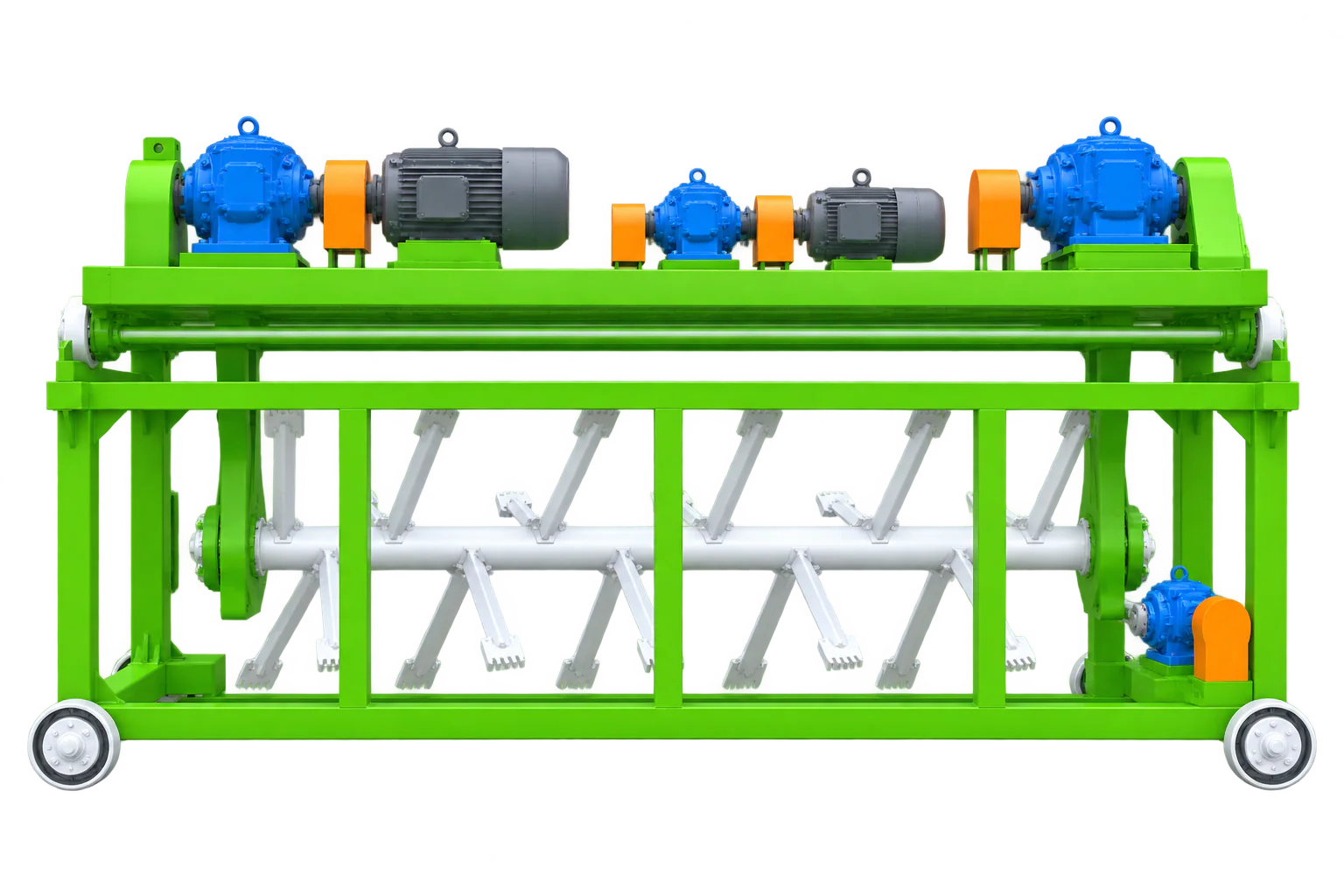


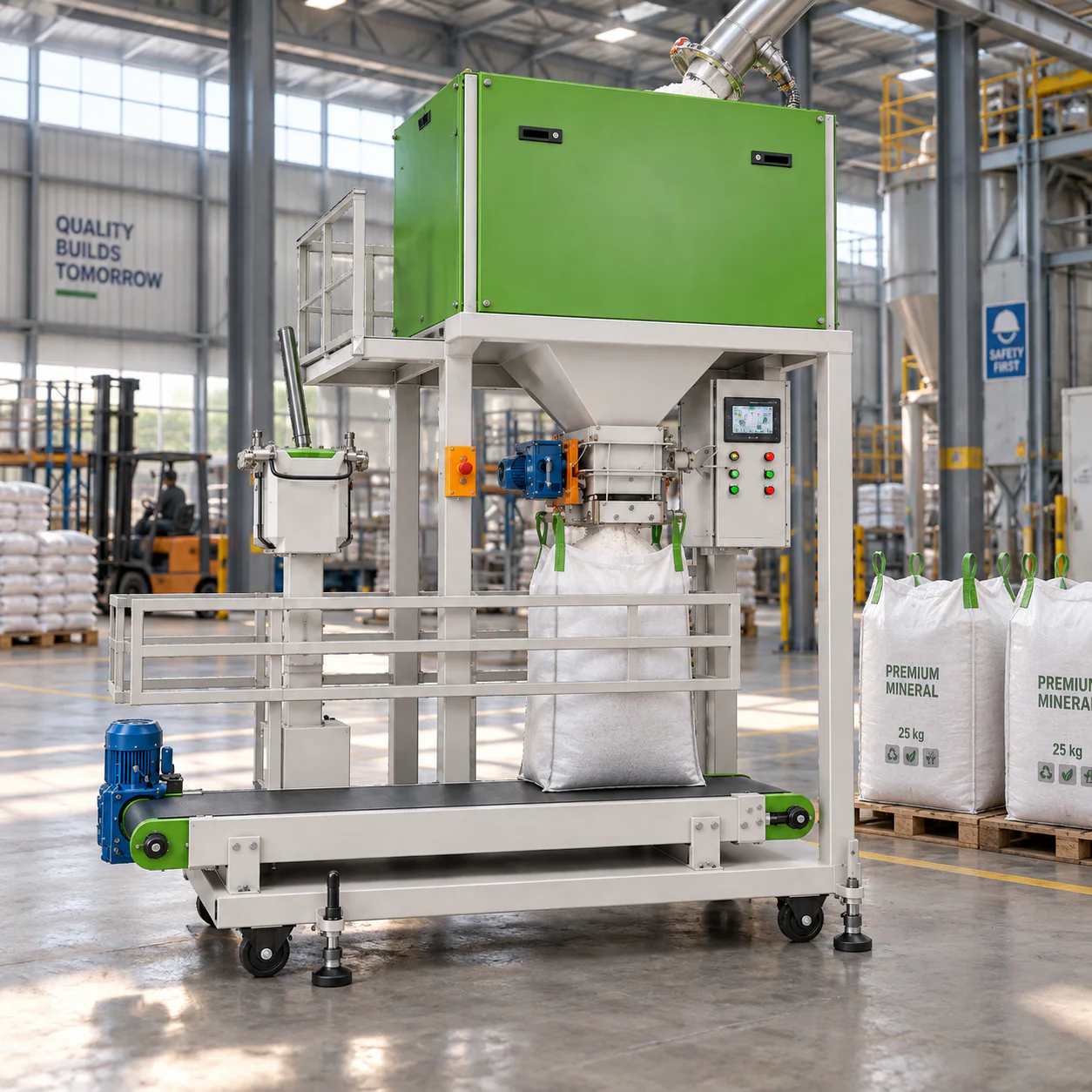
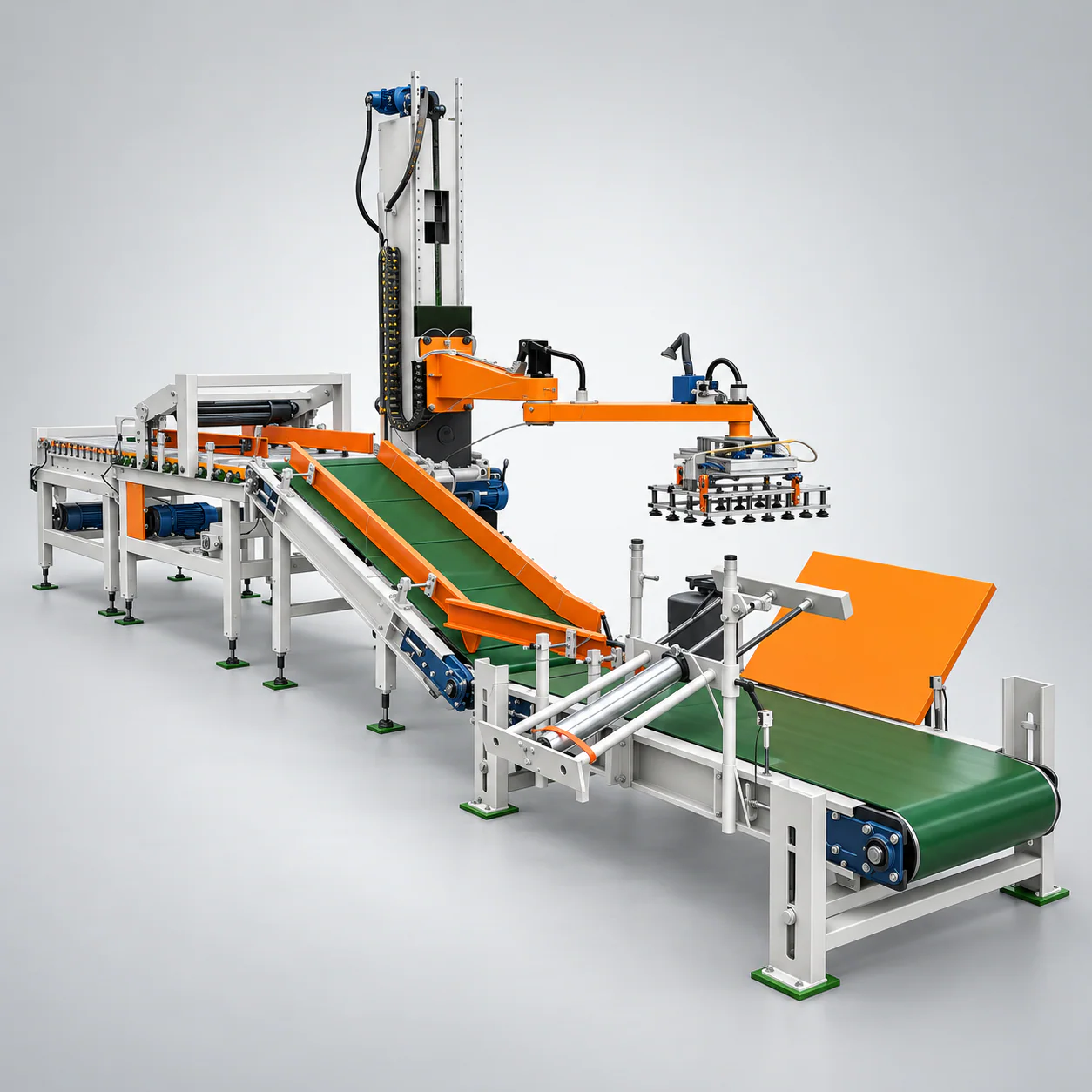
Bands describe typical project scale; the actual figure is confirmed by mass balance, not by a nominal model number.
Windrow yard with a walk-behind turner and manual packing.
Groove or straddle turner, forced aeration, automatic screening and bagging.
In-vessel or multi-bay fermentation with continuous sizing and packing.
Basis for the utility sheet. Local voltage, fuel and water quality are confirmed during engineering.
Turner, crusher and screener dominate; the yard itself is low-load.
Added at windrow build to hit the moisture window; leachate collection is part of the design.
Forced aeration blowers where bays or vessels are used.
Biofilter or cover where the site is near housing; this is often the permit condition.
Impermeable pad and collection tank; untreated leachate is the usual environmental failure point.
Fermentation occupies far more area than the machine hall, and the ratio drives site selection.
Controls that decide whether the line holds its specification in daily operation.
Logged through the thermophilic phase; a flat curve means the windrow is too wet, too dry or too small.
The single number that predicts whether fermentation will start.
Reheating and germination tests before the batch leaves the yard.
A worn or overloaded screen silently changes the declared particle size.
Straight answers on scope, limits and what we need to quote.
For loose compost sold in bulk or blended locally, yes. If the market pays for uniform granules or the product must be bagged and shipped far, add a granulation stage.
Typically 2–4 weeks of active phase plus 2–4 weeks of maturation, depending on feedstock, climate and turning regime.
Roughly 50–60 percent, tested by squeeze or meter. Too wet goes anaerobic, too dry never heats.
Yes, with larger windrows, insulated vessels or hall housing. Winter throughput drops unless the design accounts for it.
Porosity, prompt turning, cover or biofilter. Odour complaints usually trace back to over-wet feedstock.
Feedstock types and tonnage, site area, target particle size, bag or bulk, and the local permit limits.
Send material, capacity and site constraints; the engineering team replies with a route recommendation.
 +8615981847286WhatsApp
 [email protected]Email
 Please enter the contentSearch
 Click to return to the topTOP