Granular blends
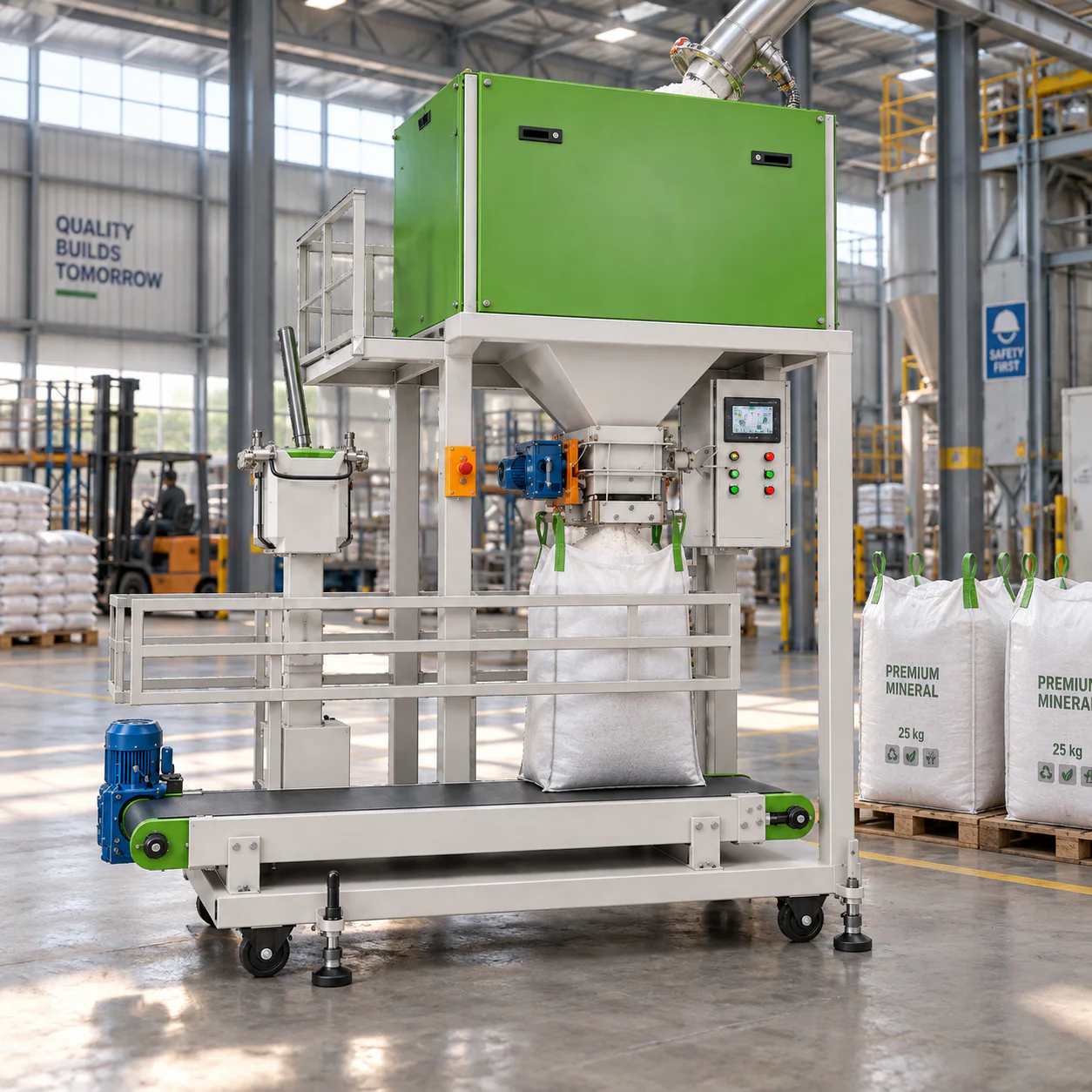
BB and NPK blends, free-flowing, 2–4 mm. Standard net-weight filler.
 Get a Proposal
The finishing end of a blending plant as a standalone system: net-weight filling, sealing, conveying and palletising, sized to the bags you actually sell.
Packing is where the blend meets the customer. This line takes blended material from a silo or day bin and delivers sealed, weighed, palletised bags, with the weighing accuracy and dust control that decide whether the net weight is legal and the plant is pleasant to work in.
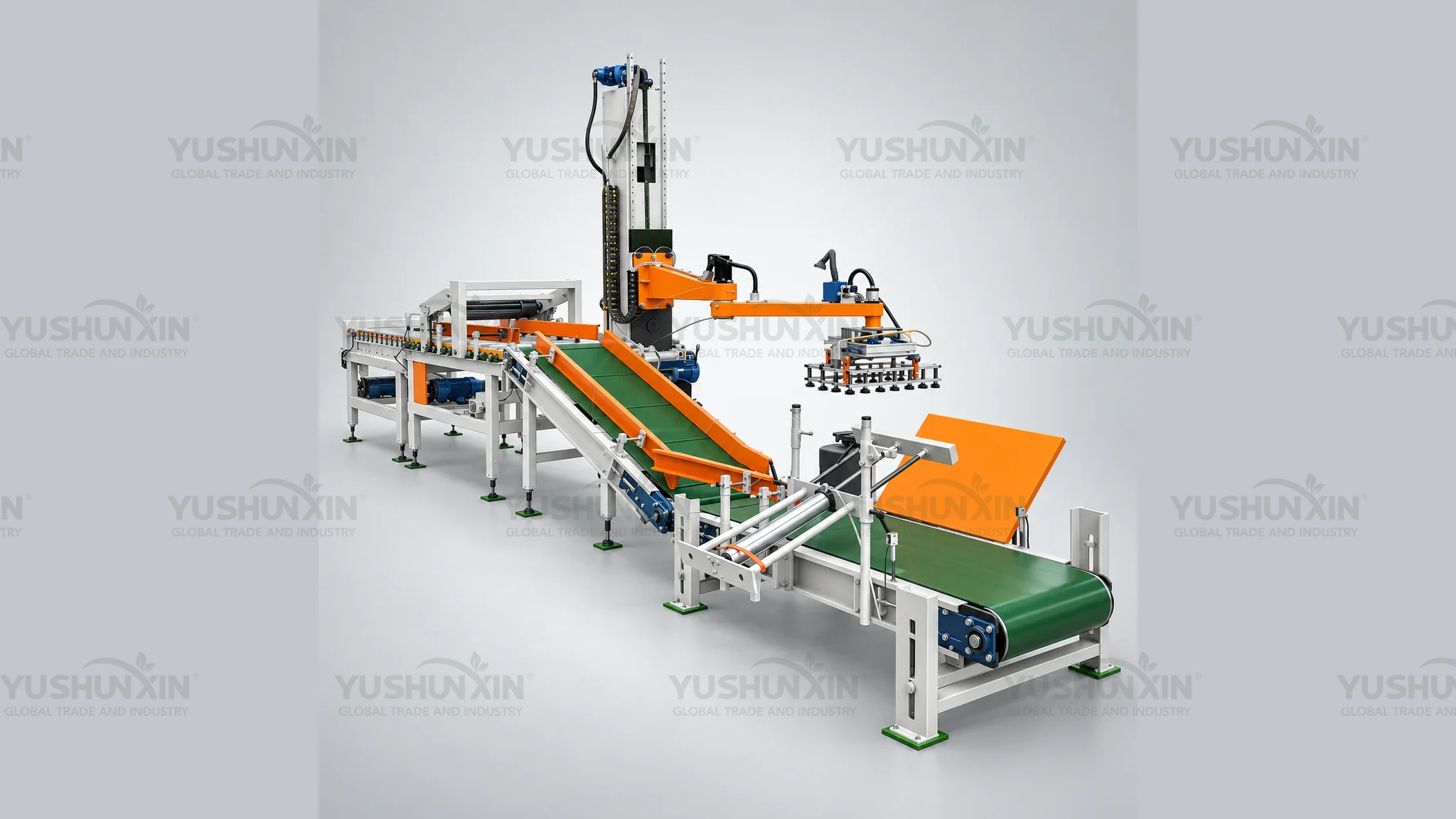
The net-weight filler is the legal instrument of the plant; the palletiser is the labour saving.
The line handles free-flowing granular blends. Powder-heavy or sticky products need a different filler type, so the material matters.
BB and NPK blends, free-flowing, 2–4 mm. Standard net-weight filler.
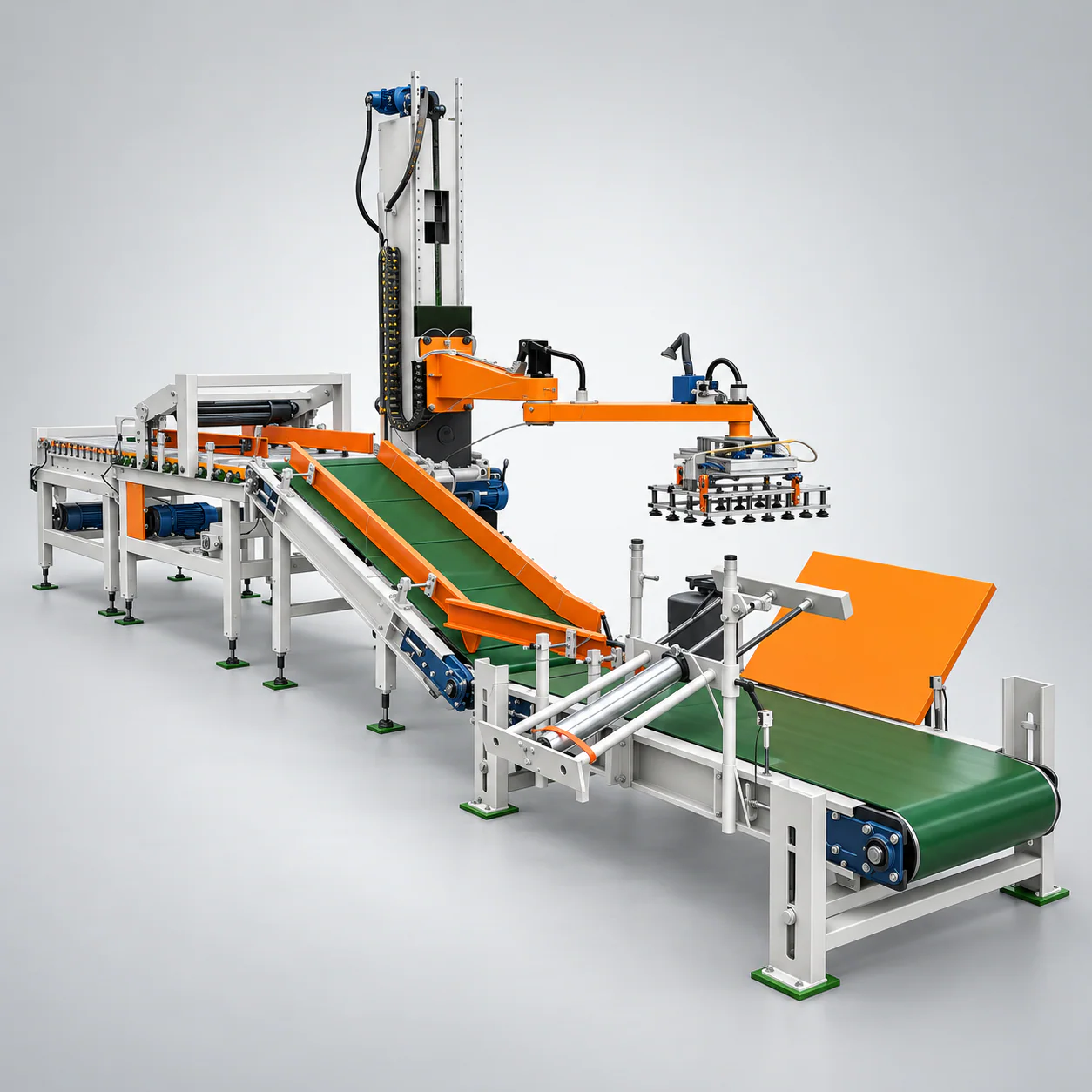
Slower filling, more dust; needs a different dosing head and stronger extraction.
Coating oil can make granules sticky in the hopper; agitation may be needed.
PP woven, laminated, PE-lined or bulk bags; the filling head is chosen for the bag.
Standard wooden or plastic pallets; the palletiser pattern follows the bag size.
Output is measured in bags per hour at a stated net-weight tolerance, not in tonnes per hour.
Checked by checkweigher; legal-for-trade requirements vary by market.
Sewn or heat-sealed depending on bag and product hygroscopicity.
A square, upright bag stacks and sells better than a slumped one.
Wiped or extracted before palletising; dust on the outside is a complaint waiting to happen.
Five stages from silo to pallet. Each one is a separate machine that can be added in phases.
| Stage | Purpose | Key equipment | Control point |
|---|---|---|---|
| 1. Buffer silo | Decouple blending from packing | Day bin with level control | Bridging, segregation |
| 2. Net-weight filling | Fill each bag to target weight | Automatic weighing and filling machine | Dribble feed setting |
| 3. Sealing | Close the bag | Sewing or heat sealer | Seam strength |
| 4. Conveying | Move and flatten the bag | Belt conveyor, bag flattener | Bag stability |
| 5. Palletising | Stack to pattern | Palletiser or robotic arm | Pattern vs pallet strength |
Typical equipment scope for this route. Final selection follows the approved mass balance and site conditions.
Bands describe typical project scale; the actual figure is confirmed by mass balance, not by a nominal model number.
Semi-automatic; manual bag placing, single filler.
Automatic bag placing, sewing and palletising.
Twin fillers with automatic palletiser and stretch wrapper.
Basis for the utility sheet. Local voltage, fuel and water quality are confirmed during engineering.
Filler, conveyors and palletiser.
Bag clamps, cylinders, cleaning.
At the filling spout; the main housekeeping issue on any bagging line.
Palletising and bag storage usually need more area than the filler itself.
Controls that decide whether the line holds its specification in daily operation.
Every bag or a defined sample, logged.
Tested at start of shift.
Bags packed vs bags shipped.
Visual check before palletising.
Straight answers on scope, limits and what we need to quote.
Typically 10–50 kg, with the filling head and pallet pattern set for the size you sell most.
Yes, with a different dosing head and stronger dust extraction; the throughput drops.
Above roughly 8 bags per minute, manual stacking becomes the constraint and the injury risk.
Bag size and type, bags per hour, product bulk density and the local legal metrology requirement.
Send material, capacity and site constraints; the engineering team replies with a route recommendation.
 +8615981847286WhatsApp
 [email protected]Email
 Please enter the contentSearch
 Click to return to the topTOP